
When a parent disagrees with their child’s school evaluation, you have powerful legal rights that can ensure your child receives the comprehensive assessment they deserve. The independent educational evaluation (IEE) evaluation process represents one of the most important tools available to parents navigating the special education system, providing access to objective, professional evaluation services that can reveal educational needs the school may have missed.
At Bridges of the Mind Psychological Services, we understand that every child’s educational journey is unique, and we’re committed to providing personalized, neurodiversity-affirming assessments that capture the full picture of your child’s strengths and challenges. Our team specializes in comprehensive evaluations for children, teens, and adults, serving families throughout the Sacramento, San Jose, and South Lake Tahoe areas from our centrally located practice.
What Is an Independent Educational Evaluation?
An independent educational evaluation (IEE) is a comprehensive assessment conducted by qualified professionals who are not employed by your child’s school district. Under the Individuals with Disabilities Education Act (IDEA), parents have the fundamental right to request an IEE at public expense when they disagree with the evaluation conducted by their child’s school district.
The independent educational evaluation process serves as a crucial safeguard in the special education system, ensuring that parents have access to objective, third-party assessments when school evaluations feel incomplete, inaccurate, or insufficient. Unlike school-based evaluations that may be influenced by budget constraints or limited resources, when a child is evaluated independently, it provides an unbiased perspective on your child’s educational needs.
This evaluation right exists because lawmakers recognized that parents know their children best and should have recourse when they believe a school district’s assessment hasn’t captured their child’s true abilities or challenges. The independent educational evaluation becomes part of your child’s educational record and must be considered by the school district when making decisions about services, accommodations, and educational planning.
When a school conducts an evaluation that a parent disagrees with, the school system must either pay for an independent educational evaluation at public expense or initiate a due process hearing to defend their original assessment. This requirement ensures that families can access comprehensive evaluations without financial barriers when they believe their child’s needs haven’t been properly identified.
Your Legal Rights Under IDEA
The Individuals with Disabilities Education Act provides clear and specific rights regarding independent educational evaluations. When a parent disagrees with their child’s school evaluation, you can submit a written request for an independent educational evaluation at public expense, and the school district has only two legal options: they must either approve your request and pay for the evaluation, or they must file for a due process hearing to defend their original assessment.
Importantly, you are not required to explain or justify why you disagree with the school’s evaluation. The law protects your right to seek a second opinion without having to prove your concerns are valid. You can request only one IEE per school district evaluation with which you disagree, and timing typically allows up to two years from the completion of the school’s evaluation, though some school districts may have shorter timelines.
The school district cannot simply refuse your request or impose conditions beyond those specified in federal regulations. They must follow specific criteria established under IDEA regulations, and any additional requirements they attempt to impose must be reasonable and not create barriers to accessing the evaluation at public expense. If they deny your IEE request, they bear the burden of proving their evaluation was appropriate through the due process hearing.
This legal framework ensures that when a parent disagrees with a school district’s assessment, there are clear procedures to follow that protect both the child’s right to appropriate evaluation and the parent’s right to seek an independent perspective on their child’s educational needs.
When to Consider Requesting an IEE
Parents seek independent educational evaluations for various compelling reasons, each reflecting unique concerns about their child’s educational assessment. Understanding these scenarios can help you determine whether an independent educational evaluation might benefit your family’s situation.
Incomplete or Missing Assessments
School district evaluations sometimes focus on limited areas while overlooking crucial aspects of your child’s learning profile. If your child demonstrates challenges with executive functioning, sensory processing, or social communication that weren’t thoroughly assessed when the school conducts their evaluation, these gaps can significantly impact the accuracy of educational recommendations.
Similarly, if standardized testing didn’t capture your child’s true abilities due to anxiety, attention difficulties, or other factors affecting test performance, having your child evaluated independently can provide a more comprehensive understanding of their capabilities and needs. When a parent disagrees with the scope or quality of the initial evaluation, requesting an independent educational evaluation ensures a more thorough assessment.
Suspected Learning Differences
When you observe your child struggling at home with homework, reading, or organizational tasks, but the school district evaluation suggests they’re performing adequately, this disconnect often signals the need for more detailed assessment. Learning differences can manifest differently in various environments, and an independent educational evaluation can identify patterns that school-based testing might miss.
The evaluation process should be comprehensive enough to identify all areas where a child may need support. When determining eligibility for special education services, it’s crucial that the assessment captures the full picture of your child’s learning profile.
Neurodiversity-Affirming Perspective
Our approach at Bridges of the Mind emphasizes understanding your child through a neurodiversity-affirming lens, recognizing that neurological differences like ADHD, autism, and learning differences represent natural variations in human neurology rather than deficits to be corrected. This perspective can lead to more strength-based recommendations that help your child thrive rather than simply cope.
When a child is evaluated independently through our neurodiversity-affirming approach, we focus on identifying both challenges and strengths, ensuring that educational recommendations support your child’s authentic self while addressing areas where they may need additional support.
Concerns About Evaluation Quality
If you have questions about the testing environment, the evaluator’s qualifications, whether appropriate accommodations were provided during testing, or if your child was experiencing unusual stress or illness during the evaluation period, these factors can significantly impact the validity of results. When a parent disagrees with the process or conditions under which the school district conducted their evaluation, an independent educational evaluation can provide a fresh perspective.
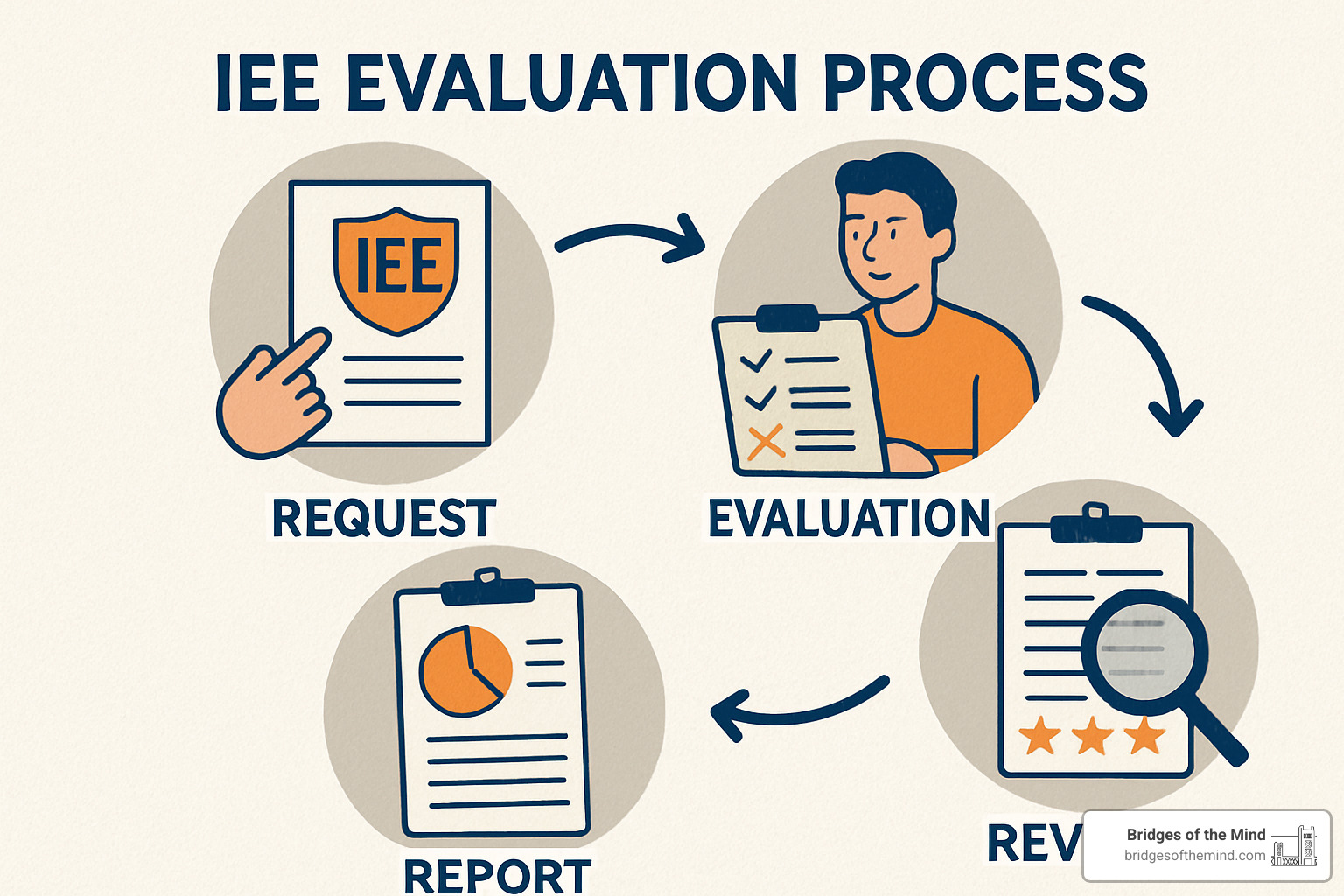
The Step-by-Step IEE Process
Step 1: Submitting Your Formal Request
The independent educational evaluation process begins with a written request to your school district. This documentation creates an official record and starts the legal timeline that protects your rights throughout the process. When you request an IEE, you’re exercising a fundamental right under federal law.
Your written request should include several essential elements: a clear statement that you disagree with the school’s evaluation, a specific request for an independent educational evaluation at public expense, the date and your contact information, and your child’s name and school information.
We recommend sending your request via both email and certified mail to create a comprehensive paper trail. Send copies to your child’s school, the school district’s special education department, and consider including the school district’s legal department to ensure proper routing and timely response. The school district must respond to your request without unnecessary delay.
Step 2: School District Response and Evaluator Selection
Once you submit your request, the school district must respond within a reasonable timeframe, typically within a few weeks. They will either approve your request and pay for the evaluation at public expense, or they will file a due process complaint to defend their original evaluation through a due process hearing.
If approved, you have the right to choose any independent evaluator who meets the school district’s established criteria. You’re not limited to their preferred list if you identify someone else who meets their qualifications. The independent evaluator must be qualified to conduct the specific type of assessment your child needs and must be located within a reasonable geographic area.
At Bridges of the Mind, we meet the qualifications for conducting independent educational evaluations and bring extensive experience in working with families through this process. Our neurodiversity-affirming approach ensures comprehensive evaluations that truly capture your child’s unique profile while maintaining the highest professional standards.
When a school district approves your IEE request, they cannot impose conditions beyond those specified in federal regulations. The public agency must pay for the evaluation and cannot unreasonably delay the process or create additional barriers to accessing services.
Step 3: Comprehensive Evaluation Process
The independent educational evaluation process involves multiple components designed to provide a complete picture of your child’s learning profile, strengths, and areas where they may need additional support. When determining eligibility for services and supports, a comprehensive assessment is essential.
Cognitive and Academic Assessment: This includes comprehensive testing of intellectual abilities, academic achievement across multiple domains, processing speed and working memory evaluation, and executive functioning assessment. We examine how your child learns best and identify any cognitive patterns that may impact their educational performance. The evaluation of your child includes detailed analysis of their unique learning style and processing abilities.
Behavioral and Social-Emotional Evaluation: We conduct structured observations, assess attention and focus capabilities, evaluate social communication skills, and examine emotional regulation patterns. This component helps identify how behavioral and emotional factors may be affecting your child’s educational experience and their ability to access their free appropriate public education.
Comprehensive Record Review: Our team thoroughly reviews previous evaluations, school records, medical history when relevant, and conducts detailed interviews with parents and school staff. This background information provides crucial context for understanding your child’s educational journey and ensures the evaluation obtained is comprehensive and accurate.
Specialized Assessments: Depending on your child’s specific needs, we may conduct additional assessments for learning disabilities, ADHD, autism spectrum characteristics, or other areas of concern. Each evaluation is tailored to address the specific questions and concerns that prompted the independent educational evaluation request.
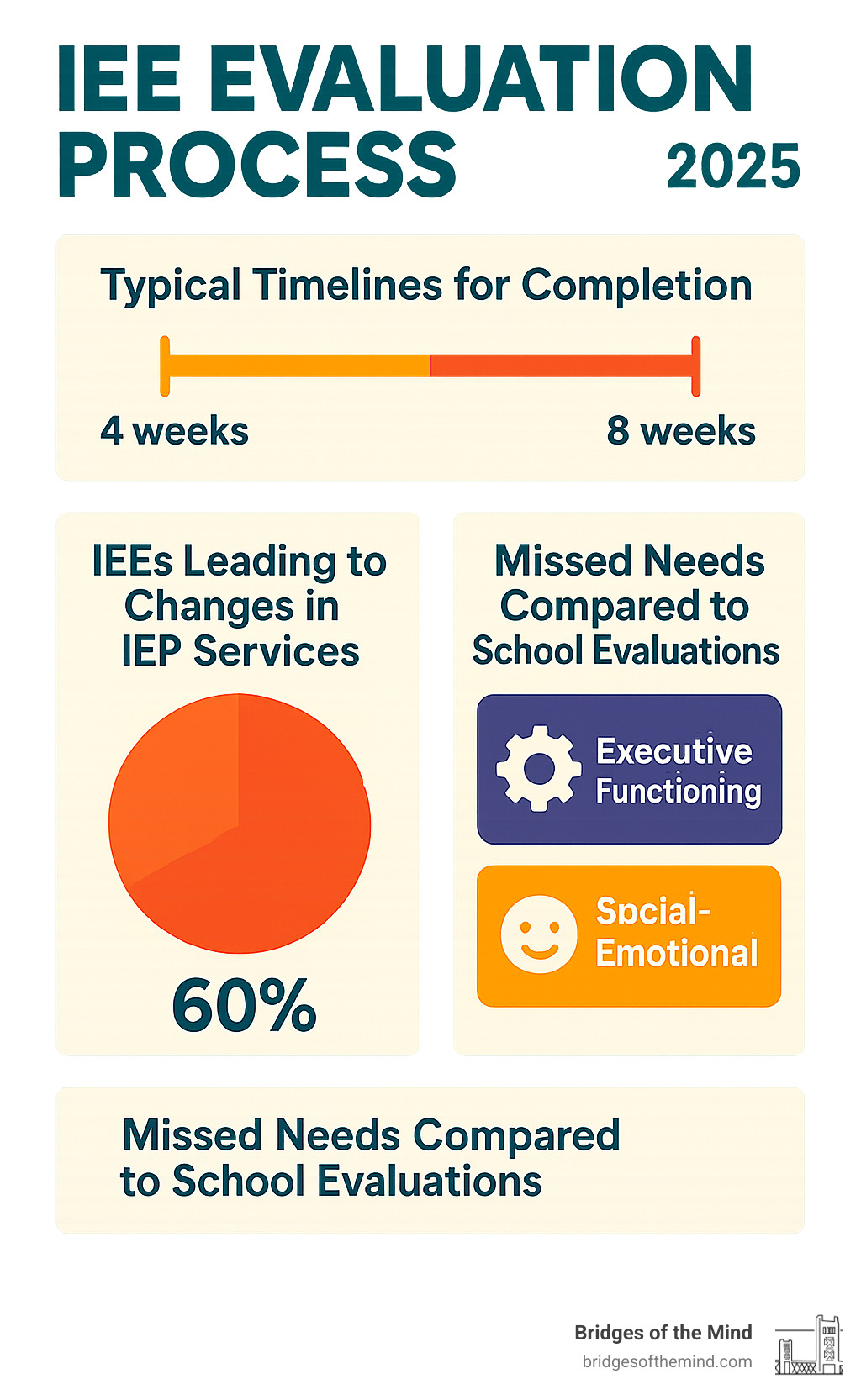
The evaluation process typically takes several weeks to complete, but we maintain a no-waitlist policy to ensure families don’t experience unreasonable delays in accessing services. This rapid response time means your child can receive the evaluation they need without prolonged delays that can impact their educational progress.

Our Specialized Services
ADHD Testing and Evaluations
Our comprehensive ADHD assessments go beyond simple behavioral checklists to examine attention, hyperactivity, and impulse control across multiple settings. We use evidence-based assessment tools and consider how ADHD symptoms may manifest differently in various environments, providing detailed recommendations for both educational and home support strategies.
When a parent disagrees with a school district’s assessment of ADHD or attention-related challenges, our independent educational evaluation can provide the comprehensive analysis needed to ensure your child receives appropriate supports and accommodations.
Autism Testing and Evaluations
We provide thorough autism evaluations using gold-standard assessment tools, conducted through a neurodiversity-affirming lens that recognizes autism as a natural neurological variation. Our assessments identify both challenges and strengths, leading to recommendations that support your child’s authentic self while addressing areas where they may need additional support.
The evaluation of your child for autism spectrum characteristics includes comprehensive analysis of social communication, sensory processing, and behavioral patterns across multiple environments. This thorough approach ensures that when your child is evaluated independently, all relevant factors are considered.
Learning Disability Evaluations
Our learning disability assessments examine multiple areas of academic functioning, including reading, writing, mathematics, and processing skills. We identify specific learning patterns and provide detailed recommendations for educational accommodations, interventions, and support strategies tailored to your child’s unique learning profile.
When determining eligibility for special education services related to learning disabilities, a comprehensive independent educational evaluation can provide crucial evidence for your child’s IEP team to consider.
Comprehensive Assessment Services
We offer assessment services for children, teens, and adults, recognizing that learning differences and neurodevelopmental conditions can be identified at any age. Our adult assessments are particularly valuable for individuals who may have been missed during childhood or who are seeking to better understand their learning and working styles.
For families seeking premium service options, our concierge assessment services provide enhanced scheduling flexibility and comprehensive support throughout the evaluation process, ensuring your family receives the highest level of personalized attention.
Using IEE Results to Support Your Child
The completion of your independent educational evaluation marks the beginning of an important advocacy process. Under IDEA, your school district has a legal obligation to consider the IEE results when making decisions about your child’s education. This requirement provides you with significant leverage in ensuring your child receives appropriate services and support.
The independent educational evaluation serves as objective, professional documentation of your child’s needs, transforming your parental concerns into data-driven evidence that the school district must seriously consider. These results can support your child’s need for specialized educational services, document the necessity for specific accommodations or assistive technology, and provide clear guidance for developing effective IEP goals and interventions.
When a parent disagrees with their school district’s educational planning decisions, the independent educational evaluation results provide crucial evidence for advocacy efforts. The school district must consider these findings when developing your child’s IEP and cannot simply dismiss the recommendations without valid educational reasons.
Integrating Findings into Educational Planning
Successful integration of independent educational evaluation findings requires active participation in the IEP process. Come prepared to present the findings clearly and advocate for specific changes based on the evaluation recommendations. Don’t assume the school staff will automatically understand how the results translate into classroom needs – you may need to help connect the evaluation findings to your child’s daily educational experience.
The outcomes of effective integration can be transformative. Your child may receive new IEP goals targeting previously unidentified areas of need, gain access to related services that weren’t previously considered, or receive modifications to their educational environment that significantly improve their learning experience.
When determining eligibility for services or when developing your child’s IEP, the independent educational evaluation provides objective evidence that supports your advocacy efforts and helps ensure your child receives their free appropriate public education.
What Makes Bridges of the Mind Different
No Waiting Lists
We understand that when you’re concerned about your child’s educational needs, time is critical. That’s why we maintain a no-waitlist policy, ensuring you can schedule a comprehensive assessment within 2-3 weeks of your initial contact. This rapid response time means your child can receive the evaluation they need without prolonged delays that can impact their educational progress.
When a school district approves your IEE request, they cannot unreasonably delay the process. Our commitment to timely service ensures that families can access the independent educational evaluation they need without unnecessary delays.
Neurodiversity-Affirming Approach
Our evaluation philosophy recognizes that neurological differences represent natural variations in human development rather than disorders to be corrected. This strength-based approach leads to recommendations that help your child thrive as their authentic self while addressing areas where they may need additional support.
When your child is evaluated independently through our neurodiversity-affirming lens, we focus on identifying both challenges and strengths, ensuring that educational recommendations support your child’s unique learning style and processing abilities.
Comprehensive, Personalized Evaluations
Every evaluation we conduct is tailored specifically to your child’s unique needs and the questions that prompted the assessment. We don’t use one-size-fits-all testing batteries – instead, we carefully select assessment tools and approaches that will provide the most meaningful information about your child’s learning profile.
The evaluation of your child includes comprehensive analysis across multiple domains, ensuring that when you request an IEE, you receive a thorough assessment that addresses all areas of concern.
Expert Clinical Team
Our team includes licensed psychologists and educational specialists with extensive experience in conducting independent educational evaluations. We stay current with best practices in assessment and maintain expertise across the full range of neurodevelopmental conditions and learning differences.
Each qualified professional on our team understands the legal requirements for independent educational evaluations and ensures that every assessment meets the highest standards for quality and comprehensiveness.
Serving Sacramento, San Jose, and South Lake Tahoe
Located centrally to serve families throughout Northern California, our practice provides convenient access to comprehensive assessment services for families in Sacramento, San Jose, South Lake Tahoe, and surrounding communities. We understand the unique educational landscapes in these diverse regions and can provide evaluation services that address the specific needs of families in each area.
Our in-person assessment model ensures the highest quality evaluation experience, allowing for optimal rapport-building and observation of your child’s learning style in a controlled environment. This personalized approach often yields more accurate and comprehensive results compared to remote assessment options.
When families in these communities need an independent educational evaluation, we provide the expertise and personalized service that ensures each child receives a comprehensive assessment of their unique needs and abilities.
Insurance and Payment Options
While we primarily serve self-pay clients to ensure the highest level of personalized service, we do accept Kaiser insurance specifically through our Autism Clinic services. For families seeking independent educational evaluations, we work with you to understand payment options and can provide documentation that may be useful for reimbursement through health savings accounts or other benefits.
It’s important to understand that when a school district approves your IEE request, they pay for the evaluation at public expense. This means that qualifying families can access comprehensive independent evaluations without paying at their own expense.
We encourage you to contact our office directly to discuss pricing and scheduling information, as we work with each family to ensure access to the evaluation services their child needs.
Navigating Challenges in the IEE Process
When School Districts Disagree with IEE Findings
While school districts must consider independent educational evaluation results, they’re not required to implement every recommendation. However, they cannot simply dismiss findings without providing educationally sound reasoning for their position. When disagreements arise, school districts must engage in genuine problem-solving and propose alternative approaches that address your child’s identified needs.
If you find yourself in this situation, you have several options including requesting follow-up IEP meetings, seeking mediation through your state’s dispute resolution process, or pursuing due process if necessary. The independent educational evaluation serves as powerful evidence of your child’s needs throughout any dispute resolution process.
When a parent disagrees with how the school district responds to the independent educational evaluation findings, the due process system provides additional protections to ensure your child’s rights are upheld.
Due Process Considerations
Due process hearings provide formal legal recourse when school districts deny IEE requests or when significant disagreements arise about your child’s educational program. These proceedings allow an impartial hearing officer to review evidence and make binding decisions about your child’s educational needs.
When a school district files a due process complaint to defend their original evaluation, a hearing officer will review all evidence, including any independent educational evaluation results, to determine whether the school district’s assessment was appropriate. If the hearing officer finds that the school district’s evaluation was inadequate, they may order the school district to pay for an independent educational evaluation at public expense.
While due process can feel overwhelming, it represents an important safeguard that ensures school districts cannot arbitrarily deny your rights or ignore your child’s documented needs. The comprehensive nature of an independent educational evaluation often provides crucial evidence in these proceedings.
The due process hearing system includes procedural safeguards that protect both parents’ and children’s rights throughout the evaluation and dispute resolution process. These protections ensure that families have meaningful opportunities to advocate for their children’s educational needs.

Understanding California-Specific Protections
For families in California, additional protections exist beyond federal IDEA requirements. If you believe your procedural rights have been violated during the independent educational evaluation process, you can file a compliance complaint with the California Department of Education. This provides an additional avenue for ensuring that school districts follow proper procedures when parents request independent evaluations.
The California Department of Education monitors compliance with both federal and state special education requirements, providing oversight to ensure that families can access the independent educational evaluations they need without unreasonable delays or improper barriers.
Supporting Your Child’s Educational Journey
The independent educational evaluation process represents just one tool in your advocacy toolkit as a parent. Understanding your rights, maintaining detailed records of your child’s educational experience, and building collaborative relationships with school personnel all contribute to ensuring your child receives appropriate educational support.
Remember that you know your child better than anyone else. When something feels off about their evaluation or educational program, trust your instincts and explore your options. The law provides these protections specifically because parents’ insights and concerns are valuable and necessary for ensuring children receive appropriate educational services.
When a parent disagrees with their school district’s assessment or educational planning, the independent educational evaluation process provides a clear pathway for seeking objective, professional evaluation of your child’s needs. This process ensures that all children have access to comprehensive evaluations that can identify their unique learning profiles and support needs.
Taking the Next Step
If you’re considering an independent educational evaluation for your child, we encourage you to take action sooner rather than later. Educational challenges don’t improve with time when underlying needs remain unaddressed, and early identification of learning differences can significantly impact your child’s long-term educational success.
Our team at Bridges of the Mind is here to support you throughout this process, from understanding your rights to conducting comprehensive evaluations that provide meaningful insights into your child’s unique learning profile. We’re committed to helping families navigate the special education system effectively while ensuring every child receives the personalized support they need to reach their full potential.
The independent educational evaluation process may seem complex, but you don’t have to navigate it alone. With the right support and information, you can effectively advocate for your child and ensure they receive the comprehensive assessment and educational support they deserve.
When you request an IEE from Bridges of the Mind, you’re choosing a team that understands both the legal requirements and the educational needs of children who learn differently. Our comprehensive approach ensures that your child’s evaluation provides the detailed information needed to support their educational success.
Contact Bridges of the Mind Psychological Services today to learn more about how an independent educational evaluation can support your child’s educational journey. Our experienced team is ready to provide the personalized, neurodiversity-affirming assessment services your family needs to move forward with confidence and clarity.