
Why Understanding ADHD Testing for Teens Matters
When your teenager struggles with focus, organization, or impulsivity, you may wonder whether this represents typical adolescent behavior or something more significant. ADHD tests for teens provide comprehensive professional evaluations designed to deliver clear, actionable answers for families seeking understanding and support.
According to the CDC, Attention Deficit Hyperactivity Disorder (ADHD) affects approximately 9.4% of adolescents nationwide. The teenage years present unique challenges, as increased academic demands and social pressures can make ADHD symptoms more noticeable and impactful. While online ADHD quiz tools and screening tests can serve as helpful initial steps for parents and teens to identify possible signs, these tools cannot replace the thorough evaluation provided by qualified mental health professionals.
At Bridges of the Mind Psychological Services in Sacramento, we specialize in comprehensive ADHD test protocols for teens using a neurodiverse-affirming approach. We understand how crucial it is for families throughout the Sacramento, San Jose, and South Lake Tahoe areas to receive accurate diagnosis and timely answers about their teenager’s needs. Our practice eliminates the typical waiting periods that families often face—you can schedule a comprehensive in-person assessment within 2-3 weeks.
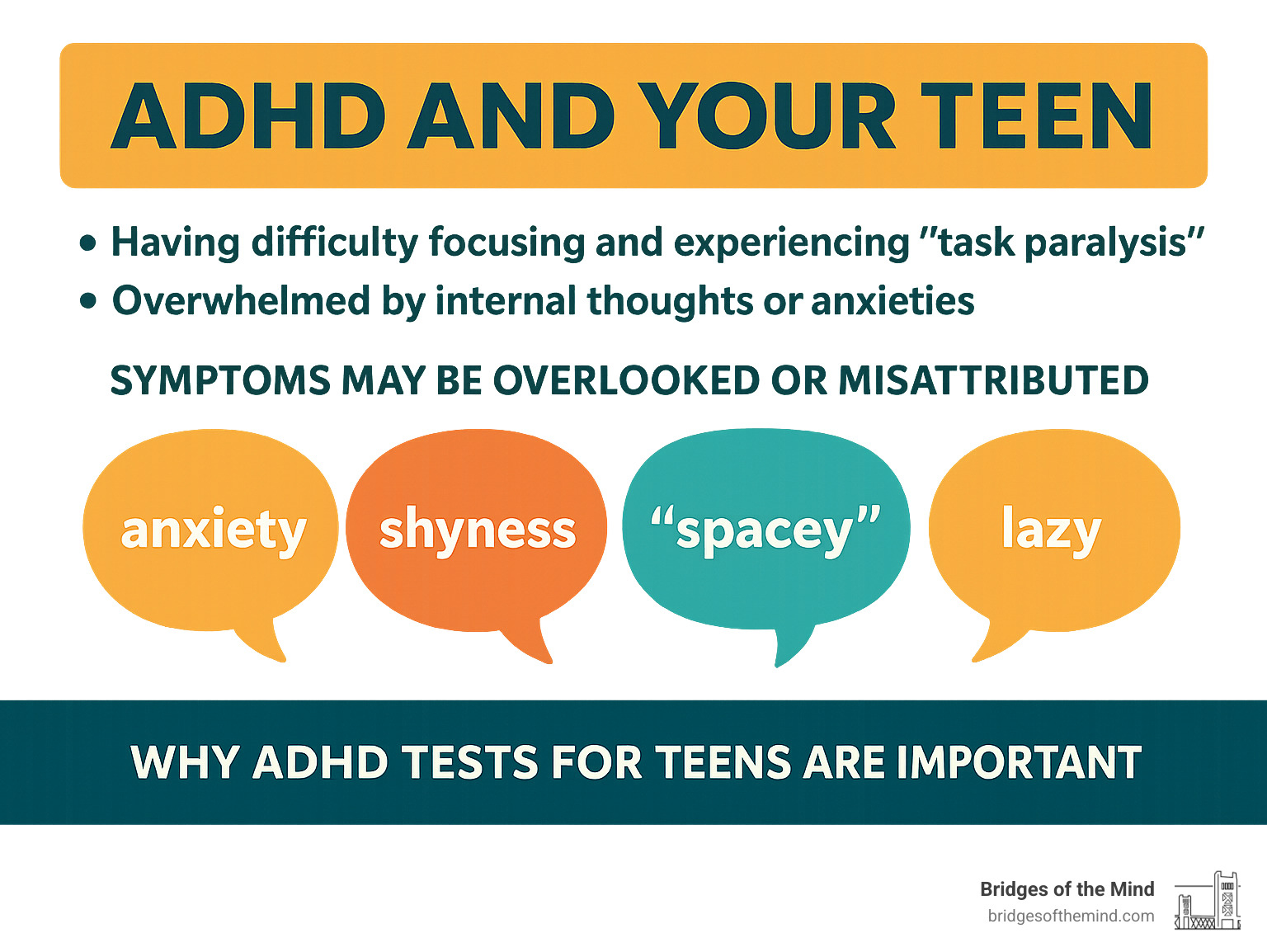
A professional ADHD evaluation encompasses multiple components to ensure accuracy and thoroughness. Our comprehensive assessment process includes clinical interviews with both teens and parents, standardized rating scales completed by multiple sources including teachers, psychological and cognitive testing, and a detailed review of academic and developmental history. This multi-faceted approach allows us to understand your teen’s unique presentation and provide personalized recommendations.
If you suspect your teen may have ADHD, consulting with qualified mental health professionals represents the essential next steps. Only through proper evaluation can we diagnose ADHD accurately, ensuring your teenager receives appropriate treatment and support tailored to their specific needs.
Understanding ADHD in Adolescence: Signs and Symptoms
Adolescence brings significant developmental changes, but for some teenagers, this period highlights underlying challenges with attention and executive function. ADHD represents a neurodevelopmental condition whose symptoms often become more pronounced as teens face increasing academic and social demands. Understanding these signs enables parents to recognize when professional evaluation may be beneficial.
Common ADHD Symptoms in Teenagers
ADHD is characterized by persistent patterns of inattention and/or hyperactivity-impulsivity that interfere with daily functioning. Mental health professionals recognize three primary presentations based on criteria from the American Psychiatric Association’s Diagnostic and Statistical Manual (DSM-5):
Predominantly Inattentive Presentation: Teenagers with this presentation struggle primarily with focus, organization, and task completion. They may appear forgetful, easily distracted, or seem to “zone out” during conversations or other activities. Common symptoms include difficulty sustaining attention during tasks that require sustained mental effort, making careless mistakes in schoolwork, and trouble organizing tasks and activities.
Predominantly Hyperactive-Impulsive Presentation: These teens often seem restless, fidgety, and display impulsive behaviors. They may interrupt others frequently, make hasty decisions, or have difficulty waiting their turn in various situations and play activities.
Combined Presentation: This most common form involves significant symptoms from both inattentive and hyperactive-impulsive categories, creating challenges across multiple areas of functioning.
Inattentive symptoms typically include making careless mistakes in schoolwork, difficulty sustaining attention during tasks that require sustained mental effort, struggling with organization and time management, frequently losing necessary items, and being easily distracted by external stimuli. Many teens struggle to finish schoolwork or lose things important for completing assignments. Hyperactive-impulsive symptoms often manifest as fidgeting or restlessness, difficulty remaining seated when expected, talking excessively, and trouble waiting for appropriate turns in conversations or other activities.
How ADHD Presents Differently in Teen Boys vs. Girls
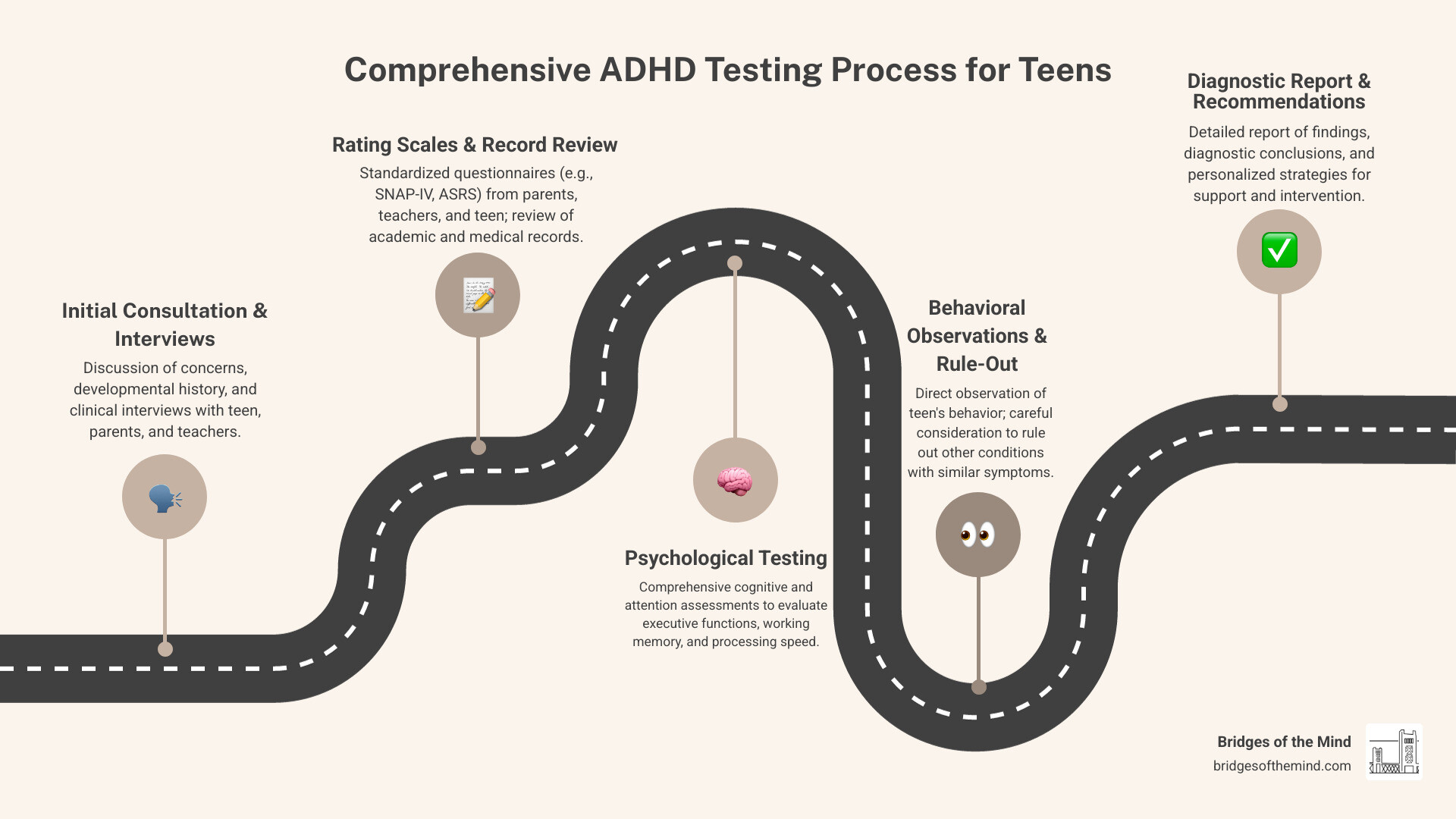
ADHD symptoms can manifest differently across genders, which sometimes contributes to underdiagnosis, particularly in girls. Understanding these differences helps parents recognize potential signs regardless of their teenager’s gender. Research shows that girls with ADHD may present differently than boys, often internalizing their struggles and experiencing challenges that other adults might overlook.
In teenage boys, ADHD often presents with more obvious, externalizing behaviors such as hyperactivity, impulsivity, or disruptive classroom behavior. These signs are typically easier for parents and teachers to identify, leading to earlier recognition and evaluation.
In teenage girls, symptoms frequently appear more subtle and internalizing. Girls may present with daydreaming, quiet struggles with organization, social withdrawal, or anxiety. Many girls develop sophisticated masking strategies to hide their difficulties, which can lead to increased stress and lowered self-esteem when their ADHD remains undiagnosed. Girls with ADHD may also feel sad or experience anxiety as secondary symptoms.
Teachers and other adults play crucial roles in observing behavioral patterns across different settings. Their input provides valuable insights into how symptoms manifest in structured academic environments compared to home settings, helping create a more complete picture of a child’s behavior during the evaluation process.
The Impact of ADHD on Teen Development
Undiagnosed ADHD can significantly affect multiple aspects of a teenager’s life, creating challenges that extend far beyond the classroom. Academic performance often suffers as teens experience difficulty with attention, organization, and time management, leading to lower grades and increased frustration with schoolwork. Many bright teens with ADHD experience a discrepancy between their potential and their academic performance, which can be particularly frustrating for both teens and their families.
Socially, impulsive behaviors and inattention can interfere with reading social cues, leading to misunderstandings and potential isolation from peers. These challenges may affect the development of close friendships and social confidence during a critical developmental period.
Within family dynamics, struggles with chores, forgetfulness, and emotional regulation can create ongoing tension at home. Parents may feel frustrated by repeated reminders and unfinished tasks, while teens may feel criticized or misunderstood.
Perhaps most significantly, repeated academic and social setbacks can severely impact a teenager’s well-being and self-esteem. Many teens with undiagnosed ADHD internalize their struggles, developing beliefs that they are “lazy,” “stupid,” or simply not capable of success. This negative self-perception can persist into adulthood without proper intervention and support.
Additionally, teens with ADHD face higher risks for co-occurring mental health conditions, including anxiety and depression. The constant mental effort required to manage daily activities and meet expectations can lead to emotional exhaustion and feelings of overwhelm.
The Importance of Early Detection and Intervention
Early detection of ADHD can significantly improve outcomes for teenagers and their families. When parents, teachers, or other adults notice persistent signs such as inattentive symptoms, trouble organizing tasks, making frequent careless mistakes, or challenges with tasks that require sustained mental effort, taking these concerns seriously becomes crucial for the teen’s long-term success.
The American Psychiatric Association’s Diagnostic and Statistical Manual (DSM-5) outlines specific criteria for diagnosing ADHD, including symptoms of ADHD related to impulsive behaviors, inattention, and hyperactivity. Professional evaluation considers input from multiple sources—parents, teachers, and other adults who know the teenager well—to create a comprehensive understanding of the teen’s functioning across different environments.
Timely intervention proves essential because untreated ADHD can significantly impact academic performance, daily activities, and overall well-being. Teenagers with undiagnosed ADHD often develop secondary challenges including anxiety, depression, and persistent low self-esteem, which can complicate their ability to manage primary ADHD symptoms effectively.
A comprehensive evaluation conducted by qualified healthcare providers or mental health professionals assesses behavioral patterns across various settings, identifies common symptoms, and helps determine the most appropriate course of action. This process may include standardized rating scales, detailed interviews, and thorough evaluation of academic and developmental history to ensure diagnostic accuracy and rule out other mental disorders or learning disorders.
Parents and caregivers play vital roles in early detection by staying attuned to their teenager’s difficulties with tasks requiring sustained mental effort, challenges completing schoolwork, or ongoing struggles in social situations. Seeking professional evaluation as soon as possible signs emerge can prevent years of unnecessary struggle and provide access to effective support and treatment strategies.
Ultimately, early detection empowers families to address ADHD proactively, leading to improved academic performance, stronger relationships, and enhanced overall quality of life. With guidance from qualified mental health professionals and comprehensive treatment planning, teenagers with ADHD can develop the skills and confidence needed to thrive.
The Professional Diagnostic Process: What ADHD Tests for Teens Involve
When concerns arise about your teenager’s attention and behavior, many parents begin by searching for information about ADHD tests online. While internet-based screening tools can provide useful preliminary information, understanding their limitations and the necessity of comprehensive professional evaluation remains crucial for accurate diagnosis and effective treatment planning.
Moving Beyond Online Screening Tools
Online ADHD test platforms and screening quizzes can serve valuable purposes as initial assessment tools. These resources help identify potential symptoms related to inattention, hyperactivity, and impulsivity while allowing families to organize their observations before consulting with professionals. However, an ADHD test administered online cannot provide diagnostic conclusions that healthcare providers rely upon for treatment decisions.
These tools lack the comprehensive assessment capabilities necessary to rule out other conditions that may present similarly to ADHD, such as anxiety, depression, learning disorders, or medical conditions. Additionally, they cannot account for the developmental and environmental factors that influence symptom expression or determine whether a child’s behavior meets the specific criteria outlined in the Diagnostic and Statistical Manual.
When screening tools suggest potential ADHD, the essential next steps involve comprehensive professional evaluation. Our assessments strictly adhere to rigorous standards outlined in the American Psychiatric Association’s Diagnostic and Statistical Manual (DSM-5), the official diagnostic manual for mental health conditions.
Comprehensive ADHD Evaluation Components
A thorough evaluation for ADHD represents a multi-step process designed to create a complete understanding of your teenager’s functioning across various environments and situations. At our Sacramento practice, we provide in-person, comprehensive ADHD test protocols with no waiting lists, enabling families to receive answers within 2-3 weeks of initial contact.
Clinical Interviews: We conduct extensive conversations with both parents and teenagers to discuss developmental history, current symptoms, and their impact on daily functioning. These interviews explore family medical history, early developmental milestones, academic performance, and social relationships to understand the full context of your teen’s experiences.
Standardized Rating Scales: Both parents and teachers complete validated questionnaires designed to gather objective data about behavioral patterns in different settings. Teacher input proves particularly valuable for understanding how symptoms manifest in structured academic environments compared to home settings, providing crucial information about consistency across environments.
Comprehensive Record Review: We carefully examine school report cards, previous evaluations, academic records, and other relevant documents to understand your teenager’s historical functioning and identify patterns over time.
Psychological and Cognitive Testing: Our evaluation includes a comprehensive battery of assessments measuring cognitive abilities, executive functions (including attention and impulse control), academic achievement levels, and emotional functioning. These tests provide objective measures of your teen’s strengths and areas of need.
Differential Diagnosis: A critical component of our evaluation process involves ruling out other mental disorders and learning disorders while determining whether symptoms might be better explained by other factors, including anxiety, depression, medical conditions, or environmental stressors.
Following the complete evaluation, families receive a detailed written report containing findings, diagnostic conclusions when applicable, and personalized recommendations for support and intervention. This report serves as a valuable resource for coordinating care with schools, healthcare providers, and other professionals involved in your teenager’s support system.

Understanding DSM-5 Diagnostic Criteria
Official ADHD diagnosis relies on specific criteria established in the Diagnostic and Statistical Manual, ensuring consistent and accurate diagnostic practices across mental health professionals. These rigorous standards help distinguish ADHD from other conditions and ensure appropriate treatment recommendations.
Key diagnostic criteria include evidence of persistent patterns of significant inattention and/or hyperactivity-impulsivity, presence of several symptoms before age 12, symptom manifestation across two or more settings (such as home and school), clear evidence that symptoms interfere with social, academic, or occupational functioning, and confirmation that symptoms are not better explained by another mental disorder.
These comprehensive criteria, combined with clinical expertise and thorough evaluation processes, guide our approach to ADHD assessment, ensuring accurate diagnosis and helpful diagnostic conclusions that lead to effective support strategies.
Navigating Co-Occurring Conditions and Treatment Planning
An ADHD diagnosis often represents just one component of a teenager’s overall mental health profile. Research indicates that many teens with ADHD experience at least one co-occurring condition, making comprehensive evaluation essential for developing effective approaches to treat ADHD that address all aspects of functioning.
Common Co-Occurring Conditions
Understanding the relationship between ADHD and other mental health conditions helps families prepare for comprehensive treatment planning and realistic expectations about intervention timelines.
Anxiety and Mood Disorders: The persistent stress of managing ADHD symptoms can contribute to significant anxiety or depression. Many teenagers develop anxiety about academic performance, social interactions, or their ability to meet expectations. Depression may emerge from repeated experiences of failure or negative feedback, with some teens reporting they feel sad frequently.
Learning Disorders: Approximately one-third of teenagers with ADHD also have specific learning disorders such as dyslexia, dyscalculia, or written expression disorders. These co-occurring conditions can significantly complicate academic performance and require specialized educational interventions.
Disruptive Behavior Disorders: Conditions such as oppositional defiant disorder occur more frequently in teens with ADHD and can create additional challenges within family relationships and school settings.
Sleep Disorders: Many teenagers with ADHD experience sleep difficulties, including trouble falling asleep, staying asleep, or achieving restorative sleep. These sleep challenges can exacerbate symptoms of ADHD and affect overall functioning.
Our comprehensive evaluation process screens for these and other potential co-occurring mental disorders to ensure we develop truly personalized support plans that address all relevant factors affecting your teenager’s functioning and well-being.
Evidence-Based Treatment Approaches
Once we establish a complete diagnostic picture, we recommend multimodal approaches to treat ADHD that combine several evidence-based strategies to support your teenager’s success. Treatment plans are highly individualized and may include various combinations of the following components:
Behavioral Therapy and Executive Function Coaching: This cornerstone of ADHD treatment focuses on teaching teenagers practical skills for organization, time management, problem-solving, and emotional regulation. Executive function coaching specifically targets planning abilities, working memory strategies, and flexible thinking skills essential for academic and social success.
Family Education and Support: We provide comprehensive education about ADHD to help family members understand the condition and develop effective strategies for supporting their teenager while reducing conflict at home. This includes communication strategies, behavioral management techniques, and stress reduction approaches for the entire family.
Educational Advocacy and Accommodations: We work with families to secure appropriate school supports through IEP or 504 plans. These may include extended time for tests and assignments, preferential seating, breaks during long tasks, organizational supports, and modified homework expectations to support academic performance.
Lifestyle Optimization: Regular exercise, consistent sleep schedules, balanced nutrition, and stress management techniques can significantly support brain health and improve focus, attention, and emotional regulation.
Coordination with Medical Providers: When appropriate, we collaborate with physicians regarding medication options that may help manage core ADHD symptoms. This decision-making process involves careful consideration of individual factors, family preferences, and potential benefits and risks.
Our Neurodiverse-Affirming Approach
At Bridges of the Mind, we embrace a neurodiverse-affirming perspective that views ADHD as a natural variation in brain function rather than a deficit requiring correction. This approach fundamentally transforms how teenagers understand themselves and their experiences.
Instead of focusing solely on challenges and deficits, we emphasize identifying and nurturing the unique strengths often associated with ADHD, including creativity, innovative thinking, resilience, hyperfocus abilities, and dynamic problem-solving skills. This strengths-based approach helps reduce stigma, builds genuine self-esteem, and fosters resilience by teaching teenagers to work effectively with their neurological differences.
Our philosophy guides every aspect of our work, from initial evaluations through ongoing support, empowering teenagers to develop confidence, self-advocacy skills, and strategies for long-term success on their own terms.
Frequently Asked Questions About ADHD Testing for Teens
Families considering ADHD evaluation often have important questions about the process, timeline, and next steps. Here are answers to some of the most common concerns we address with families in our Sacramento practice.
How accurate are online ADHD tests for teenagers?
Online ADHD test platforms serve as useful preliminary resources for identifying potential symptoms and organizing observations, but they cannot provide accurate diagnostic conclusions. These tools lack the comprehensive assessment capabilities necessary to rule out other mental disorders that may present similarly to ADHD, such as anxiety, depression, learning disorders, or medical conditions.
Professional evaluation remains essential for accurate diagnosis because it incorporates multiple assessment methods, considers developmental history and environmental factors, evaluates functioning across different settings, and differentiates ADHD from other conditions that may require different treatment approaches.
What should I do if I suspect my teenager has ADHD?
Begin by observing and documenting specific behavioral patterns, noting when and where challenges occur most frequently. Engage in open, non-judgmental conversations with your teenager about their experiences and struggles, as their perspective provides invaluable insights into their daily challenges.
The next crucial steps involve consulting with qualified mental health professionals who specialize in adolescent ADHD evaluation. While pediatricians can rule out medical factors, psychologists with expertise in neurodevelopmental conditions provide the comprehensive assessment necessary for accurate diagnosis and treatment planning.
At our practice, we eliminate typical waiting periods by offering comprehensive evaluations with no waitlists, allowing families to receive answers within 2-3 weeks of initial contact.
How can I best support my teenager through the evaluation process?
Your support plays a crucial role in your teenager’s experience throughout evaluation and beyond. Communicate openly with your teen, reassuring them that evaluation represents a step toward understanding and the right support rather than judgment of their character or abilities. Frame ADHD as a different way the brain processes information, emphasizing that it reflects neurological differences rather than personal shortcomings.
Educate yourself about ADHD to become a more effective advocate for your teenager and to better understand their experiences. Focus on identifying and celebrating your teen’s unique strengths, such as creativity, resilience, or innovative thinking, to build genuine self-esteem and confidence.
Work collaboratively with your teenager to establish organizational systems and routines that accommodate their learning style and support their success. Advocate with school personnel to secure appropriate accommodations while gradually teaching your teen self-advocacy skills they’ll need throughout their academic and professional lives.
What happens after my teenager receives an ADHD diagnosis?
Following diagnosis, families receive comprehensive written reports containing detailed findings, diagnostic conclusions, and personalized recommendations for intervention and support. We schedule follow-up consultations to review results, answer questions, and discuss implementation strategies for recommended treatment approaches.
Treatment typically involves coordinated approaches including behavioral interventions, educational accommodations, family support strategies, and potentially medical consultation regarding medication options. We maintain ongoing communication with families to monitor progress, adjust strategies as needed, and provide continued support throughout the treatment process.
Many families find that accurate diagnosis provides significant relief and validation for their teenager’s struggles while opening doors to effective support strategies that improve functioning across academic, social, and family environments.
Your Path Forward: Taking the Next Steps
Navigating concerns about ADHD can feel overwhelming, but remember that ADHD represents a highly manageable condition when properly understood and addressed. Comprehensive evaluation provides far more than diagnostic clarity—it offers validation for your teenager’s experiences and opens pathways to personalized strategies that can transform their daily functioning and long-term success.
At Bridges of the Mind Psychological Services, we understand that when your teenager struggles, you need answers promptly rather than waiting months for evaluation. Our Sacramento practice eliminates typical waiting periods by maintaining availability for comprehensive, in-person assessments within 2-3 weeks of initial contact.
Our team of qualified psychologists provides thorough, individualized evaluations that empower teenagers to understand themselves and access appropriate support services. Accurate diagnosis during the teenage years can prevent years of unnecessary struggle while building foundations of confidence and self-advocacy skills that serve teenagers throughout their academic careers and into adulthood.
We serve families throughout the Sacramento area, including those traveling from San Jose and South Lake Tahoe, providing accessible, high-quality evaluation services for families seeking answers and support for their teenagers. Our neurodiverse-affirming approach ensures that teenagers leave our evaluation process with enhanced understanding of their unique strengths and clear strategies for managing challenges effectively.
We focus on empowering teenagers to succeed on their own terms while developing the skills and confidence necessary for long-term success. If you’re ready to gain clarity about your teenager’s needs and access effective support strategies, we’re here to help. Contact our Sacramento practice to learn more about our comprehensive ADHD test protocols and evaluation services.
Through proper evaluation, personalized treatment planning, and ongoing support, teenagers with ADHD can develop the skills, confidence, and self-understanding necessary to thrive academically, socially, and personally. Your teenager’s journey toward success begins with accurate understanding of their unique needs and strengths—and we’re here to guide you through that process every step of the way.