
When your child struggles with attention, social communication, or behavioral challenges, finding answers can feel overwhelming. For families in the Sacramento, San Jose, and South Lake Tahoe areas, understanding the significance of comprehensive ADHD and autism evaluation is crucial for unlocking your child’s potential and accessing the support they deserve.
At Bridges of the Mind Psychological Services, we understand that every child and adult is unique, with their own constellation of strengths, challenges, and needs. Our neurodiverse-affirmative approach recognizes that neurodevelopmental disorders like ADHD and autism spectrum disorder are natural variations in human development, not deficits to be “fixed.” Through comprehensive, personalized psychological assessment, we help individuals and families gain clarity, understanding, and a roadmap for thriving.
The Critical Need for Accurate ADHD and Autism Assessment
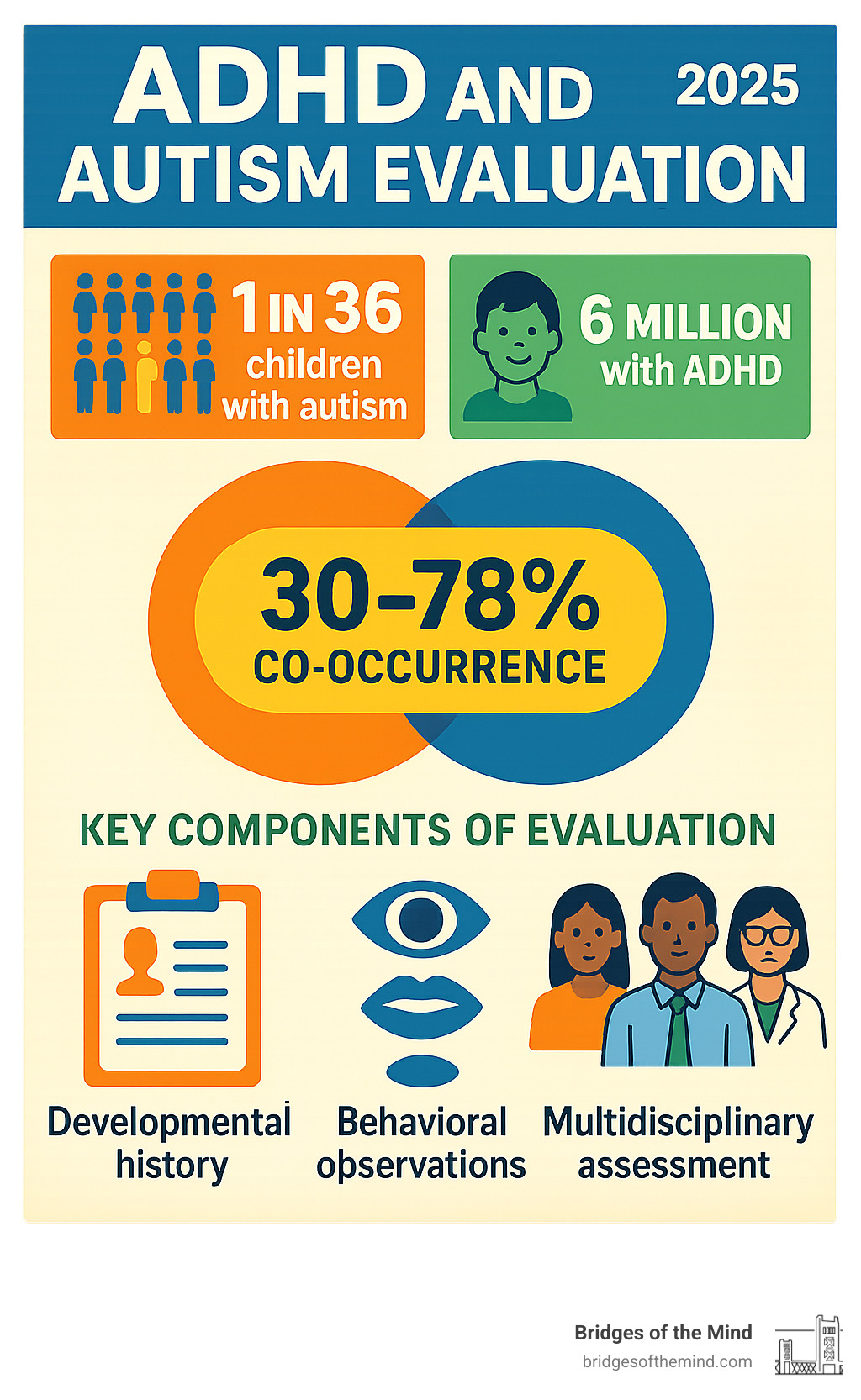
The landscape of neurodevelopmental conditions has evolved significantly over recent years. Current research indicates that autism spectrum disorder affects approximately 1 in 36 children, while attention deficit hyperactivity disorder impacts nearly 10% of children and 4.4% of adults. Perhaps most importantly, these spectrum disorders frequently co-occur, with studies showing overlap rates between 30% and 78%. This means that many individuals may have both ADHD and autism, requiring specialized assessment approaches that can identify the full picture of their neurological profile.
The stakes of accurate diagnosis extend far beyond simply receiving diagnostic criteria confirmation. When attention deficit hyperactivity disorder is identified before autism spectrum disorder, it can delay autism diagnoses by 1.5 to 2.6 years—critical time that could be spent accessing essential support services and early intervention. For families seeking answers, this delay can mean prolonged struggles in school, social settings, and daily life without appropriate accommodations or interventions.
Research consistently demonstrates that early identification of developmental disorders leads to better long-term outcomes. Children who receive timely, accurate diagnosis and appropriate support are less likely to develop secondary mental health issues such as anxiety or depression. They’re also more likely to develop strong self-advocacy skills and maintain healthy self-esteem throughout their development. The importance of recognizing early signs of autism spectrum disorder and ADHD symptoms cannot be overstated in supporting optimal developmental trajectories.
Understanding ADHD and Autism: More Than Just Labels
Attention-Deficit/Hyperactivity Disorder (ADHD)
Attention deficit hyperactivity disorder is characterized by persistent patterns of inattention, hyperactivity, and impulsivity that begin before age 12 and significantly impact functioning in multiple settings. However, ADHD symptoms vary widely among individuals and can change over time. The diagnostic criteria outlined in the Diagnostic and Statistical Manual recognize three primary presentations:
Predominantly Inattentive Presentation: Often characterized by difficulty sustaining attention, forgetfulness in daily activities, trouble following through on instructions, and appearing to not listen when spoken to directly. These individuals may seem daydreamy or lost in thought and often struggle with organization and time management. Executive functioning challenges are particularly prominent in this presentation, affecting planning, working memory, and cognitive flexibility.
Predominantly Hyperactive-Impulsive Presentation: Marked by fidgeting, restlessness, difficulty remaining seated, excessive talking, interrupting others, and making hasty decisions without considering consequences. These individuals often feel like they’re “driven by a motor” and have difficulty engaging in quiet activities. Behavioral problems may emerge when these ADHD symptoms are not properly understood or accommodated.
Combined Presentation: Features symptoms from both inattentive and hyperactive-impulsive categories. This is the most common presentation and often evolves as individuals age, with hyperactivity symptoms typically becoming less prominent in adulthood while attention challenges persist. Executive functioning difficulties remain consistent across the lifespan for most individuals with this presentation.
Autism Spectrum Disorder (ASD)
Autism spectrum disorder involves differences in social communication and interaction, along with restricted or repetitive patterns of behavior, interests, or activities. Rather than using outdated “functioning” labels, current diagnostic practices describe support needs across three levels, recognizing that autism spectrum presentations vary tremendously:
Level 1 (Requiring Support): Individuals who may manage many daily tasks independently but need support with social communication, organization, or transitions. They might struggle with social reciprocity, have difficulty initiating social interactions, and show reduced interest in social engagement. Many autistic people in this category develop sophisticated masking strategies that can make identification challenging.
Level 2 (Requiring Substantial Support): Those who need more significant assistance with social communication and may display repetitive behaviors that interfere with functioning across contexts. They might have limited verbal communication or speak in simple sentences, with challenges adapting to change. Social skills deficits are more apparent, and occupational therapy support is often beneficial.
Level 3 (Requiring Very Substantial Support): Individuals who need extensive support across all settings for severe deficits in social communication and restrictive, repetitive behaviors that significantly limit functioning in daily life. These individuals often have co-occurring intellectual disability and require comprehensive intervention approaches.
The Neurodiversity Perspective and Autism Spectrum Disorder
Our neurodiverse-affirmative approach recognizes that ADHD and autism spectrum disorder represent natural variations in human neurology rather than disorders to be eliminated. This perspective celebrates the unique strengths that often accompany these conditions—such as intense focus, creativity, attention to detail, pattern recognition, and innovative thinking—while acknowledging the genuine challenges individuals may face in environments not designed for neurological diversity.
The AuDHD Connection: When ADHD and Autism Co-Occur
The term “AuDHD” has gained recognition in both clinical practice and autistic communities to describe individuals who have both autism and ADHD. This co-occurrence is far more common than previously understood, with research indicating that 50-70% of autistic youth with average or above-average intellectual abilities also meet diagnostic criteria for attention deficit hyperactivity disorder.
Shared Neurological Foundations in Autism and ADHD
The overlap between ADHD and autism spectrum disorder has strong neurobiological underpinnings. Genetic studies reveal a 50-72% shared genetic influence, including common variants in genes that affect brain development and function. Neuroimaging research shows similarities in brain structure and connectivity, particularly in areas responsible for executive functioning, sensory processing, and attention regulation.
Diagnostic Complexity in Spectrum Disorders
Identifying both autism and ADHD requires careful clinical consideration because many symptoms can overlap or mask each other:
Executive Functioning Challenges: Both spectrum disorders involve difficulties with planning, organization, working memory, and cognitive flexibility. However, the underlying reasons may differ—ADHD-related executive functioning challenges often stem from attention regulation difficulties, while autism-related challenges may be more connected to rigid thinking patterns or difficulty with transitions.
Attention Differences: What appears as “inattention” in ADHD might actually be hyperfocus on a special interest in autism spectrum disorder. Conversely, apparent social disengagement in autism might be exacerbated by ADHD-related distractibility. Understanding these nuances requires comprehensive psychological assessment.
Sensory Processing: Both neurodevelopmental disorders frequently involve sensory sensitivities, but the patterns and triggers may differ. Understanding these nuances is crucial for developing effective support strategies and may require occupational therapy evaluation.
Social Interactions Patterns: ADHD can impact social relationships through impulsivity and inattention, while autism spectrum disorder affects social communication through differences in nonverbal communication, social reciprocity, and relationship development. Social skills training approaches must be tailored to address the specific underlying causes of social challenges.
Comprehensive Screening and Assessment: Beyond Basic Screening Tools
Early Identification Through ADHD Screening and Autism Screening
Early identification of autism spectrum disorder and attention deficit hyperactivity disorder can make a world of difference in an individual’s entire life trajectory. Comprehensive screening is the first step in recognizing developmental disorders and ensuring that individuals get the support they need as soon as possible.
For autism spectrum disorder, screening tools such as the Modified Checklist for Autism in Toddlers (M-CHAT) help identify early signs of autism spectrum presentations in young children. These autism screening instruments flag potential concerns that warrant further comprehensive evaluation. When it comes to ADHD, ADHD screening tools like the Vanderbilt ADHD assessment and various rating scales are commonly used to identify ADHD symptoms and guide further ADHD assessment.
These screening tools are not meant to provide final autism diagnoses or ADHD diagnosis, but rather to highlight individuals who may be at risk for autism spectrum disorder or attention deficit hyperactivity disorder. By catching early signs, families and professionals can take the next steps toward comprehensive psychological assessment. Early screening can help address challenges in daily life, from social interactions to learning and behavior, and set the stage for timely early intervention and support.
Advanced Assessment Tools and Rating Scales
Comprehensive evaluation goes far beyond basic screening tools. At Bridges of the Mind, we utilize gold-standard assessment instruments including:
For Autism Spectrum Disorder Assessment:
- Autism Diagnostic Observation Schedule (ADOS-2)
- Autism Diagnostic Interview-Revised (ADI-R)
- Various autism spectrum disorder based rating scales
For ADHD Assessment:
- Comprehensive ADHD screeners and rating scales
- Continuous performance tests
- Executive functioning assessment measures
- Behavioral observation protocols
These tools, when used by trained professionals, provide detailed insights into how autism and ADHD symptoms manifest across different contexts and developmental stages.
The Bridges of the Mind Approach: Comprehensive, Neurodiverse-Affirmative Assessment
At Bridges of the Mind, we’ve developed our evaluation process to address the complex, individualized nature of neurodevelopmental assessment. Our approach stands apart from traditional models by eliminating waiting lists, providing rapid access to comprehensive evaluation, and maintaining a steadfast commitment to neurodiverse-affirmative principles throughout our psychological assessment process.
Our Evaluation Philosophy
We believe that every individual who walks through our doors has inherent worth and unique strengths. Our psychological assessment process is designed not to pathologize differences, but to understand how each person’s neurological profile impacts their daily life and to identify the supports that will help them thrive. This perspective is particularly important for families who have experienced judgment or deficit-focused approaches elsewhere.
Comprehensive Multi-Method Assessment for Autism and ADHD
Our evaluation process typically spans 6-8 hours across multiple sessions, allowing us to observe individuals in various contexts and reduce the impact of test anxiety or off-days on results. This comprehensive approach addresses both autism spectrum disorder and attention deficit hyperactivity disorder presentations through:
Detailed Developmental History: We gather extensive information about early development, family history, and the progression of concerns over time. This historical perspective is crucial for understanding how autism and ADHD presentations may have evolved and how they impact current functioning. We specifically explore early signs of developmental delays and the emergence of ADHD symptoms.
Clinical Interviews: We conduct structured interviews with multiple informants—parents, teachers, partners, or other significant individuals—to understand how symptoms present across different environments. These interviews help us identify patterns that might not be apparent in a single setting and are essential for meeting diagnostic criteria.
Standardized Assessment Tools: We utilize gold-standard diagnostic instruments including comprehensive rating scales, autism screening measures, and ADHD screeners. These tools are selected based on individual needs and presentation patterns, ensuring thorough evaluation of both autism spectrum disorder and attention deficit hyperactivity disorder possibilities.
Cognitive and Academic Assessment: When appropriate, we conduct intellectual and academic assessments to understand learning profiles and identify any co-occurring learning disabilities that might impact educational planning. This is particularly important when evaluating individuals who may have mild symptoms or complex presentations.
Executive Functioning Assessment: Given the prominence of executive functioning challenges in both autism and ADHD, we conduct comprehensive evaluation of planning, working memory, cognitive flexibility, and other executive functioning skills using validated measures.
Behavioral Observation: Throughout the assessment process, we observe social communication patterns, sensory responses, attention regulation, repetitive behaviors, and other behavioral indicators that inform diagnostic conclusions about both autism spectrum disorder and attention deficit hyperactivity disorder.
Collateral Information Review: We carefully review school records, previous evaluations, medical history, and other relevant documentation to ensure our psychological assessment builds upon existing knowledge rather than duplicating efforts.
What Sets Us Apart in Autism and ADHD Assessment
No Waiting Lists: While many families in the Sacramento, San Jose, and South Lake Tahoe areas face months-long waits for evaluation services, we’ve structured our practice to provide assessment appointments within 2-3 weeks. We understand that when families are seeking answers about autism spectrum disorder or attention deficit hyperactivity disorder, delays can intensify stress and prevent access to needed supports.
In-Person Comprehensive Assessment: Our evaluation takes place entirely in person at our conveniently located facility, allowing for optimal observation and interaction. This approach enables us to observe subtle social communication patterns, sensory responses, repetitive behaviors, and other indicators that might be missed in virtual assessments.
Neurodiverse-Affirmative Care: Every aspect of our evaluation process is designed to celebrate neurodiversity while identifying areas where support might be beneficial. We focus on understanding how each individual’s unique neurological profile contributes to both their strengths and challenges, whether they have autism spectrum disorder, attention deficit hyperactivity disorder, or both.
Multidisciplinary Expertise: Our team includes licensed psychologists with specialized training in neurodevelopmental assessment, ensuring that evaluations are conducted by professionals who understand the complexity of autism and ADHD presentations across the lifespan.

The Assessment Journey: What to Expect
Initial Consultation and Goal Setting
Your evaluation journey begins with a comprehensive intake session where we discuss your concerns, goals for the assessment, and what you hope to learn about potential autism spectrum disorder or attention deficit hyperactivity disorder presentations. This collaborative approach ensures that our evaluation addresses your specific questions and provides the information most relevant to your situation.
During this initial meeting, we explore the history of concerns, previous interventions that have been tried, current challenges across different settings, and family goals for the psychological assessment. We specifically discuss early signs that may have been observed, current ADHD symptoms or autism spectrum characteristics, and how these may be impacting daily functioning.
The Comprehensive Assessment Process
Day One: Clinical Interviews and History Gathering We begin with extensive clinical interviews, gathering detailed developmental history and current functioning information. These interviews may include parents, the individual being assessed (when age-appropriate), and other key informants such as teachers or partners. We explore the development of ADHD symptoms, early signs of autism spectrum disorder, and how these may have changed over time.
Day Two: Standardized Assessment for Autism and ADHD The second day typically involves administration of standardized diagnostic tools. For autism spectrum disorder assessment, this includes structured observation tools and comprehensive rating scales. For ADHD assessment, we utilize validated ADHD screeners, continuous performance tests, and executive functioning measures. We also assess for potential learning disabilities and other co-occurring conditions.
Additional Sessions as Needed Depending on the complexity of the presentation and the questions being addressed, additional assessment sessions may be scheduled. These might include cognitive testing, academic assessment, occupational therapy evaluation for sensory processing issues, or additional specialized measures for comprehensive evaluation of both autism and ADHD.
Integration and Feedback
Following the completion of all assessment activities, our team carefully integrates all information gathered to develop a comprehensive understanding of each individual’s neurological profile. This integration process considers not just test scores, but behavioral observations, developmental history, and current functioning across multiple domains.
We provide detailed feedback sessions where we review our findings, discuss diagnostic conclusions regarding autism spectrum disorder and/or attention deficit hyperactivity disorder, and develop personalized recommendations. These sessions are designed to be collaborative conversations where families can ask questions, share their perspectives, and ensure they understand the implications of the assessment results.
Understanding Assessment Results: Beyond the Diagnosis
Diagnostic Clarity and Validation for Autism and ADHD
For many families, receiving clear autism diagnoses or ADHD diagnosis provides significant relief and validation. Understanding that longstanding challenges have a neurological basis rather than representing personal failings or inadequate parenting can be transformative. This clarity often allows families to reframe past struggles and approach future challenges with greater understanding and compassion.
Comprehensive Recommendations for Autism Spectrum Disorder and ADHD
Our psychological assessment reports include detailed, individualized recommendations across multiple domains:
Educational Support for Learning Disabilities and Developmental Delays: Specific accommodations and modifications that can support learning and academic success. These might include extended time for assignments, preferential seating, sensory breaks, or modified expectations for certain tasks. We address any identified learning disabilities and provide strategies for managing executive functioning challenges.
Therapeutic Interventions: Recommendations for specific therapeutic approaches that address identified areas of need. This might include occupational therapy for sensory processing differences, social skills training for autism spectrum disorder characteristics, or counseling for emotional regulation difficulties associated with ADHD.
Environmental Modifications: Suggestions for modifying home, school, or work environments to better support individual needs related to autism and ADHD. These recommendations are practical and actionable, designed to reduce stress and increase success in daily activities.
Medication Considerations: When appropriate, we provide information about ADHD medication options and facilitate connections with prescribing professionals who understand neurodevelopmental conditions.
Strengths-Based Strategies: Our recommendations always include strategies for building upon identified strengths and interests. We believe that supporting areas of strength is just as important as addressing challenges related to autism spectrum disorder or attention deficit hyperactivity disorder.
Ongoing Support and Resources
Psychological assessment is just the beginning of the journey. We provide families with comprehensive resource lists, including local support groups, educational advocates, therapeutic providers, and online communities that align with neurodiverse-affirmative principles and support individuals with autism and ADHD.
Special Considerations for Different Age Groups
Children and Adolescents with Autism and ADHD
For young people, psychological assessment focuses heavily on understanding how neurodevelopmental disorders impact academic performance, social relationships, and daily living skills. We pay particular attention to how ADHD symptoms and autism spectrum characteristics present in the school environment and provide detailed recommendations for educational support.
During adolescence, we also explore developing self-advocacy skills, identity formation in the context of neurodiversity, and preparation for increasing independence. This developmental period often brings unique challenges as academic demands increase and social expectations become more complex, particularly for those with autism and ADHD.
We carefully assess for developmental delays that might have been missed in earlier evaluations and ensure that any learning disabilities are properly identified and addressed. Executive functioning challenges often become more apparent during adolescence as demands for independence increase.
Adults Seeking Autism and ADHD Assessment
Adult psychological assessment requires careful consideration of how autism spectrum disorder and attention deficit hyperactivity disorder symptoms have manifested throughout the lifespan and how they currently impact work, relationships, and daily functioning. Many adults seeking assessment have developed sophisticated masking or compensatory strategies that can make identification more challenging.
We explore the individual’s developmental history, current functioning across multiple domains, and goals for the assessment. Adult assessment often focuses on understanding how neurodevelopmental differences impact career success, relationship satisfaction, and overall quality of life. This is particularly important for autistic people who may have been misunderstood or misdiagnosed earlier in life.
Gender Considerations in Autism and ADHD
Research increasingly recognizes that autism spectrum disorder and attention deficit hyperactivity disorder can present differently across genders, with girls and women often showing more subtle or internalized symptoms. These differences can lead to delayed identification and misunderstanding of support needs.
Our psychological assessment approach is sensitive to these gender-based presentation differences and includes specific tools and considerations designed to identify neurodevelopmental differences that might otherwise be overlooked. We pay particular attention to masking behaviors and internalized presentations that may be more common in females with autism and ADHD.
Addressing Co-Occurring Conditions and Mental Health
Learning Disabilities and Academic Challenges
Many individuals with autism spectrum disorder and attention deficit hyperactivity disorder also experience learning disabilities that can compound academic and social challenges. Our comprehensive evaluation includes assessment for dyslexia, dyscalculia, dysgraphia, and other specific learning disabilities that commonly co-occur with autism and ADHD.
Understanding the interaction between autism, ADHD, and learning disabilities is crucial for developing effective educational strategies. Executive functioning challenges can impact academic performance even when cognitive abilities are strong, making comprehensive assessment essential for accurate understanding of learning profiles.
Behavioral Problems and Mental Health Concerns
Both autism spectrum disorder and attention deficit hyperactivity disorder can be associated with behavioral problems, particularly when individual needs are not understood or accommodated. Our assessment helps distinguish between behaviors that are manifestations of underlying neurodevelopmental differences and those that may indicate additional mental health concerns.
We carefully evaluate for anxiety, depression, and other mental health conditions that commonly co-occur with autism and ADHD. Early intervention for both the primary neurodevelopmental conditions and any co-occurring mental health issues is essential for optimal outcomes.
Sensory Processing and Occupational Therapy Needs
Sensory processing differences are common in both autism spectrum disorder and attention deficit hyperactivity disorder, though they may manifest differently. Our assessment includes evaluation of sensory sensitivities and processing differences that may impact daily functioning.
When indicated, we recommend occupational therapy evaluation and intervention to address sensory processing challenges, fine motor difficulties, and daily living skills. Understanding sensory needs is crucial for creating supportive environments and reducing behavioral problems related to sensory overload or seeking.
The Role of Family and Caregivers in Assessment and Support
Active Participation in Autism and ADHD Assessment
Family members and caregivers play a crucial role in the psychological assessment process. Their observations and insights provide essential information about how ADHD symptoms and autism spectrum characteristics present across different settings and over time. We encourage active participation and view families as partners in the assessment process.
Parents and caregivers often complete detailed rating scales and questionnaires that help us understand the full scope of challenges and strengths. Their input is invaluable for meeting diagnostic criteria and developing appropriate recommendations for support.
Supporting Implementation of Recommendations
Following psychological assessment, families often play a key role in implementing recommendations and advocating for appropriate supports. We provide guidance and resources to help families navigate educational systems, access therapeutic services, and create supportive home environments for individuals with autism and ADHD.
This may include advocating for appropriate accommodations for learning disabilities, accessing occupational therapy services, implementing behavioral strategies, or working with schools to address executive functioning challenges.
Self-Care and Family Wellness
We recognize that supporting a family member with autism spectrum disorder or attention deficit hyperactivity disorder can be both rewarding and challenging. Our recommendations often include suggestions for family self-care, stress management, and accessing support for caregivers.
Understanding the genetic component of autism and ADHD can also help families recognize their own traits and seek support when needed. Many parents discover their own neurodivergent characteristics during their child’s assessment process.
Creating Supportive Environments for Autism and ADHD
Home Environment Strategies
Creating a supportive home environment involves understanding each individual’s unique sensory, organizational, and emotional needs related to their autism spectrum disorder or attention deficit hyperactivity disorder presentation. This might include establishing consistent routines, creating calm-down spaces, using visual supports for organization, or modifying lighting and sound levels to reduce sensory overload.
For individuals with executive functioning challenges, environmental modifications such as visual schedules, organization systems, and clear routines can significantly improve daily functioning. Understanding sensory processing needs is crucial for creating spaces that support rather than overwhelm.
School Collaboration and Educational Support
We work closely with educational teams to ensure that psychological assessment results translate into appropriate school supports. This collaboration might involve attending IEP or 504 plan meetings, providing consultation to teachers, or helping families navigate the special education process for students with autism and ADHD.
Educational support may include accommodations for executive functioning challenges, social skills support, sensory breaks, modified assignments for learning disabilities, and other individualized strategies based on comprehensive evaluation results.
Community Integration and Social Skills Development
Our neurodiverse-affirmative approach extends to helping individuals and families find their place in the broader community. This might involve connecting families with neurodiversity-affirming recreational activities, support groups, or advocacy organizations that understand autism and ADHD.
Social skills training and support should be individualized based on specific challenges identified during assessment. For autistic people, social skills interventions should respect their natural communication style while building confidence and competence in social interactions.
Early Intervention and Developmental Support
The Importance of Early Intervention
Research consistently demonstrates that early intervention for autism spectrum disorder and attention deficit hyperactivity disorder leads to better outcomes across the lifespan. When developmental delays or early signs of autism and ADHD are identified, prompt intervention can prevent secondary problems and build on existing strengths.
Early intervention might include occupational therapy for sensory processing issues, social skills training, behavioral support, academic accommodations for learning disabilities, or family education and support. The specific interventions recommended depend on individual assessment results and family priorities.
Addressing Developmental Delays
Some individuals with autism spectrum disorder or attention deficit hyperactivity disorder may also experience developmental delays in areas such as language, motor skills, or adaptive functioning. Our comprehensive evaluation identifies these delays and provides recommendations for appropriate therapeutic interventions.
Understanding the relationship between autism, ADHD, and any developmental delays is crucial for developing effective intervention plans. Some delays may be directly related to the underlying neurodevelopmental differences, while others may require separate attention and support.
Building Executive Functioning Skills
Executive functioning challenges are central to both autism spectrum disorder and attention deficit hyperactivity disorder, making this a crucial area for intervention. Our assessment provides detailed information about specific executive functioning skills that need support, including:
- Working memory and attention regulation
- Planning and organization skills
- Cognitive flexibility and problem-solving
- Emotional regulation and self-control
- Time management and task initiation
Interventions for executive functioning challenges should be individualized based on specific assessment results and may include cognitive training, environmental modifications, assistive technology, or specific skill-building programs.
Looking Forward: Life After Assessment
Building on Strengths in Autism and ADHD
Psychological assessment should illuminate not only areas of challenge but also significant strengths and abilities. Many individuals with autism spectrum disorder and attention deficit hyperactivity disorder possess remarkable talents in areas such as pattern recognition, systematic thinking, creativity, attention to detail, or passionate pursuit of interests. Understanding and nurturing these strengths is essential for long-term success and well-being.
Our strengths-based approach ensures that recommendations build on what individuals do well while addressing areas that need support. This perspective is particularly important for autistic people who may have experienced years of deficit-focused interventions.
Developing Self-Advocacy Skills
One of the most important outcomes of psychological assessment is helping individuals develop the language and skills to advocate for their own needs related to their autism spectrum disorder or attention deficit hyperactivity disorder. This includes understanding their neurological profile, knowing what supports are helpful, and being able to communicate these needs effectively to others.
Self-advocacy skills are particularly important as individuals transition to adulthood and need to navigate college, employment, and independent living. Understanding one’s autism and ADHD characteristics can be empowering and lead to better self-acceptance and success.
Ongoing Growth and Adaptation
Neurodevelopmental differences are lifelong, but support needs and strengths can evolve over time. The insights gained through comprehensive psychological assessment provide a foundation for ongoing growth and adaptation throughout the lifespan.
Regular reassessment may be helpful during major life transitions or when new challenges emerge. Understanding how autism spectrum disorder and attention deficit hyperactivity disorder characteristics may change over time helps individuals and families plan for the future.
Why Choose Bridges of the Mind for Autism and ADHD Assessment
Our Commitment to Excellence in Psychological Assessment
At Bridges of the Mind Psychological Services, we are committed to providing the highest quality assessment services while maintaining a neurodiverse-affirmative approach that celebrates individual differences. Our team stays current with the latest research and best practices in neurodevelopmental assessment, ensuring that our evaluations reflect the most current understanding of autism spectrum disorder and attention deficit hyperactivity disorder.
We utilize validated assessment tools, maintain rigorous standards for diagnostic criteria, and provide comprehensive recommendations that address the full range of support needs for individuals with autism and ADHD.
Convenient Location Serving Multiple Communities
Our strategically located facility serves families throughout the Sacramento, San Jose, and South Lake Tahoe areas. We understand that accessing quality psychological assessment services can be challenging, and we’ve designed our practice to be as accessible as possible while maintaining the highest standards of care for autism and ADHD evaluation.
Personalized Approach to Autism and ADHD Assessment
We recognize that every individual and family is unique. Our psychological assessment process is tailored to address specific concerns, goals, and circumstances. Whether you’re seeking understanding for a young child showing early signs of developmental delays or an adult who has struggled with unexplained challenges throughout their life, we adapt our approach to meet your needs.
Our assessment addresses the full spectrum of presentations, from mild symptoms that may have been overlooked to more obvious challenges that require comprehensive support. We understand that autism and ADHD can present very differently across individuals and are committed to thorough evaluation that captures each person’s unique profile.
Rapid Access to Services
Unlike many assessment providers in the area, we’ve eliminated waiting lists and can typically schedule comprehensive evaluations within 2-3 weeks. We understand that when families are seeking answers about autism spectrum disorder or attention deficit hyperactivity disorder, timely access to services is crucial for reducing stress and beginning appropriate interventions.
Taking the Next Step in Your Assessment Journey
If you’re considering psychological assessment for yourself or a family member, the decision to seek evaluation represents an important step toward understanding and support. The assessment process might feel overwhelming when you’re contemplating it, but it’s designed to provide clarity, validation, and a roadmap for moving forward with autism and ADHD.
What Questions Might Assessment Answer?
- Why does my child struggle with attention and focus despite being clearly intelligent?
- Are the social communication challenges and repetitive behaviors we’re observing signs of autism spectrum disorder?
- Why do certain environments or situations seem overwhelming or distressing?
- What specific supports would be most helpful for learning and daily functioning?
- How can we build upon existing strengths while addressing areas of challenge?
- Are there learning disabilities or other conditions that need attention?
- What does the future hold, and how can we best prepare for increasing independence?
Moving Beyond Uncertainty
Living with unanswered questions about autism spectrum disorder or attention deficit hyperactivity disorder can create stress for the entire family. Psychological assessment provides the clarity needed to move beyond uncertainty and begin implementing targeted supports that can make a meaningful difference in daily life.
Conclusion: Embracing the Journey with Autism and ADHD
Understanding autism spectrum disorder and attention deficit hyperactivity disorder through comprehensive evaluation is often the first step in a lifelong journey of growth, self-discovery, and advocacy. At Bridges of the Mind Psychological Services, we’re honored to be part of this journey with families throughout the Sacramento, San Jose, and South Lake Tahoe areas.
Our neurodiverse-affirmative approach recognizes that neurodevelopmental disorders are not obstacles to overcome but rather natural variations that, with appropriate understanding and support, can be sources of strength and innovation. Through comprehensive, personalized psychological assessment, we help individuals and families gain the insights needed to thrive as their authentic selves.
The path to understanding autism and ADHD begins with a single step—reaching out for assessment. Whether you’re concerned about your child’s development, questioning your own lifelong patterns, or seeking clarity about complex presentations that might involve both autism spectrum disorder and attention deficit hyperactivity disorder, we’re here to provide the comprehensive evaluation and support you deserve.
Our commitment extends beyond the psychological assessment itself to helping you implement recommendations, access appropriate services including occupational therapy and social skills training, and connect with communities that celebrate neurodiversity. In a world that often expects conformity, we believe that every individual deserves to be understood, supported, and celebrated for who they are.
If you’re ready to take the next step in your journey toward understanding autism and ADHD, we invite you to learn more about our comprehensive assessment services. With no waiting lists, neurodiverse-affirmative care, and a commitment to excellence in psychological assessment, we’re here to help you discover the insights and support that can transform your understanding of yourself or your loved one.
Contact us today to schedule your comprehensive autism and ADHD evaluation and begin the journey toward greater understanding, support, and thriving as your authentic, wonderful self. Every individual deserves to understand their unique neurological profile and access the supports that will help them flourish—let us help you discover yours.