Understanding Your Rights: What Independent Educational Evaluation Means for Your Family
An independent educational evaluation (IEE) in special education is a comprehensive assessment conducted by a qualified examiner who doesn’t work for your child’s school district. Essentially, it’s a second opinion on your child’s educational needs that can provide crucial clarity when you disagree with the school’s evaluation.
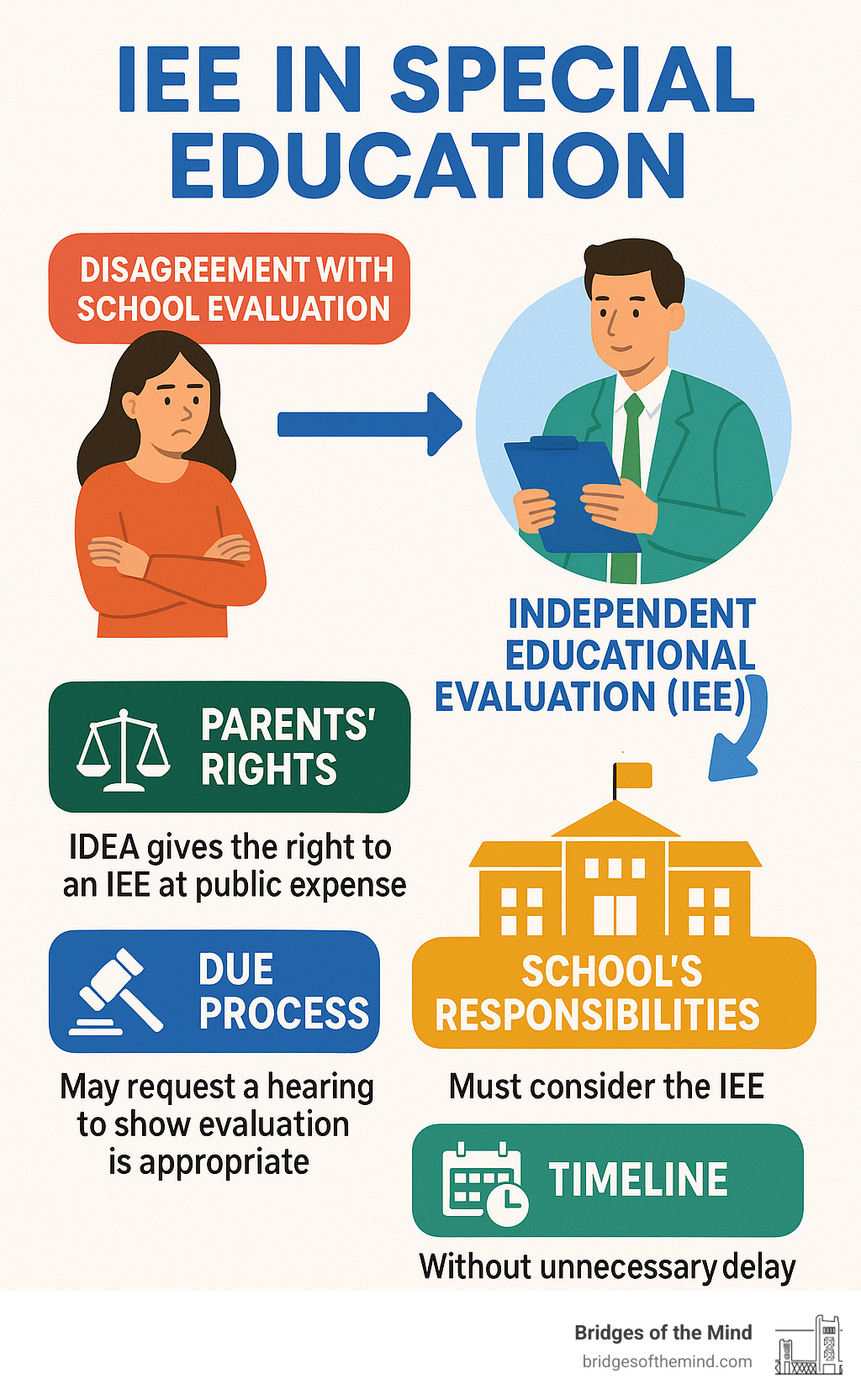
Under the Individuals with Disabilities Education Act, you have the right to request an independent educational evaluation at public expense if you disagree with an evaluation the school district has conducted. This means the school system pays for the evaluation, ensuring financial constraints don’t prevent your child from receiving a thorough, objective assessment.
At Bridges of the Mind Psychological Services in Sacramento, we help families navigate the independent educational evaluation process with our comprehensive, neurodiverse-affirmative assessments. Our team understands both the psychological and educational aspects of evaluations, ensuring families get the clarity they need without long waiting periods. We serve families throughout the Sacramento area, including those from San Jose and South Lake Tahoe who seek our specialized expertise.
What is an Independent Educational Evaluation (IEE)?
An independent educational evaluation is conducted by a qualified examiner who isn’t employed by your child’s school district. The purpose is to provide an objective, outside perspective when parents disagree with an evaluation the school has performed. This critical procedural safeguard under special education laws ensures your child’s right to a free appropriate public education (FAPE).
The independent evaluator conducting the IEE must have proper credentials to assess your child in all areas of suspected disability. At Bridges of the Mind, our evaluations examine learning, attention, and social-emotional functioning within the school context, offering a neurodiverse-affirmative lens to truly understand your child’s unique profile.
Our assessment process goes beyond traditional evaluations. We recognize that every child’s mind works differently, and we celebrate these differences while identifying specific supports needed for success. This personalized approach ensures that evaluation results accurately describe your child’s strengths and challenges.
Why Might Parents Disagree with a School’s Evaluation?
Parents often know their children best. There are several common reasons why you might disagree with a school’s evaluation and seek an independent educational evaluation:
Incomplete Testing: The school’s evaluation didn’t assess all areas of concern or have your child tested in all relevant skill areas, leaving important questions unanswered about your child’s learning profile.
Inaccurate Results: The evaluation results don’t reflect your child’s true abilities or challenges as you observe them at home and in other settings.
Missed Concerns: The school district evaluation overlooked subtle but important issues like executive functioning challenges, sensory processing differences, or social communication needs.
Language or Accommodation Issues: Testing wasn’t conducted in your child’s native language or with needed accommodations like sign language or Braille, potentially invalidating results and misrepresenting your child’s capabilities.
Different Observations: Your insights into your child’s behavior and learning style weren’t fully captured or considered during the assessment process.
When these disagreements arise, an independent educational evaluation provides additional academic tests and a fresh perspective for your child’s educational journey. Our team at Bridges of the Mind specializes in comprehensive assessments that capture the full picture of your child’s learning profile through independent testing.
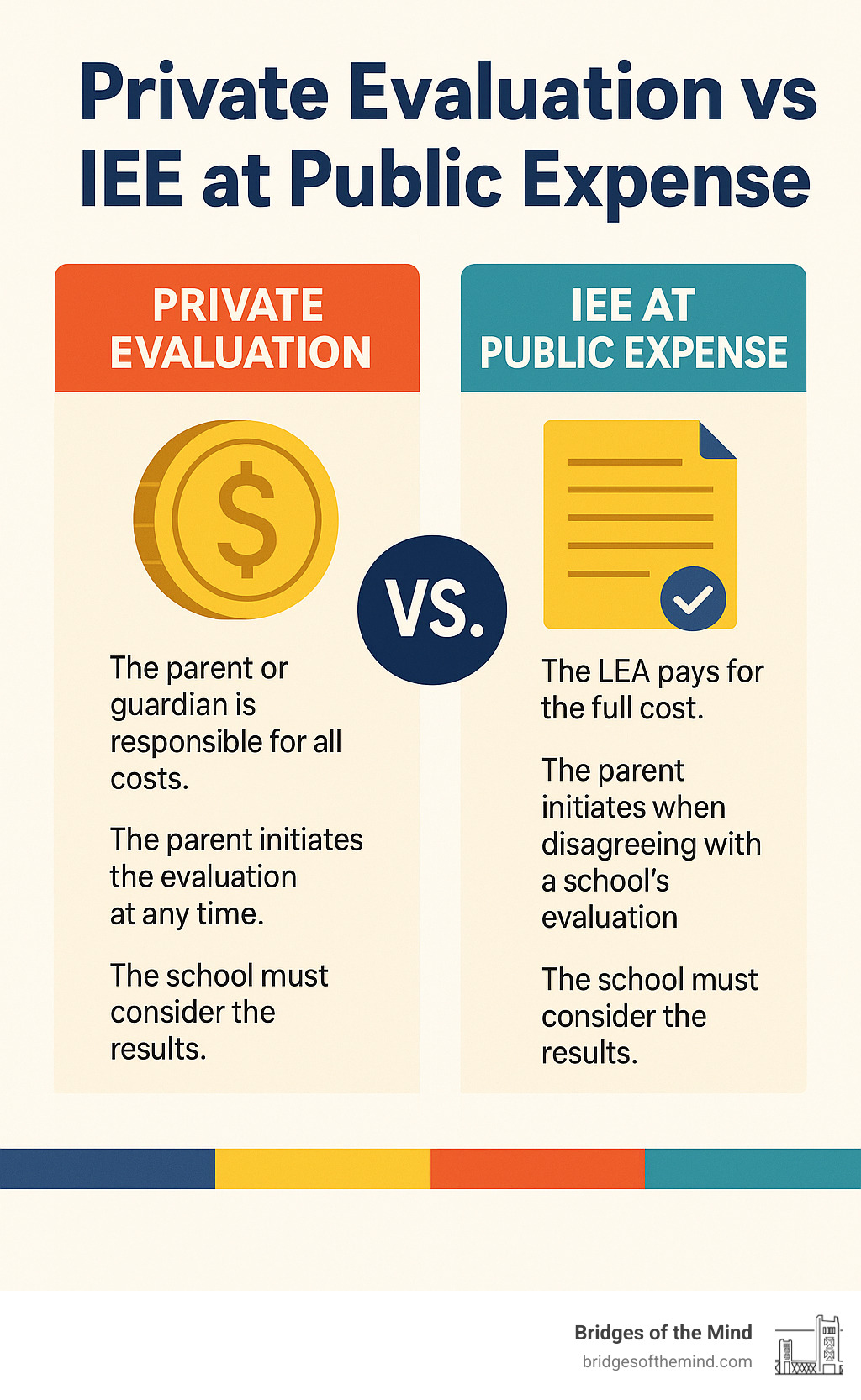
Private Evaluation vs. Independent Educational Evaluation at Public Expense
It’s important to understand the difference between a private evaluation you pay for at your own expense and an independent educational evaluation at public expense. While both offer an outside opinion, the cost and school district obligations differ significantly.
Key Differences:
Private Evaluation (Private Expense):
- You’re responsible for all costs at private expense
- Can be initiated at any time
- School staff must consider results if shared and criteria are met
- No specific triggering event required
Independent Educational Evaluation at Public Expense:
- School system pays the full cost as a public agency
- Initiated when parents disagree with a specific school district evaluation
- School district must consider results in all decisions about your child’s education
- Directly tied to special education laws’ procedural safeguards
While you can always obtain a private evaluation, requesting an independent educational evaluation at public expense provides an independent assessment without the financial burden, as long as you disagree with the school’s evaluation.
Your Right to an Independent Educational Evaluation in Special Education
Understanding your rights is essential when navigating the special education system. The right to an independent educational evaluation is one of the most powerful tools you have as parents. This right is guaranteed by the Individuals with Disabilities Education Act as a “procedural safeguard” – a legal safety net ensuring you have a meaningful voice in your child’s education.
This isn’t about being adversarial; it’s about ensuring accuracy. The school system has checks and balances, and the independent educational evaluation is a key component. It acknowledges that while school districts do their best, an outside perspective can sometimes identify issues that were missed or interpret data differently.
Understanding “At Public Expense”
“At public expense” means the school district pays the full cost of the independent educational evaluation. This critical provision in special education laws ensures that financial constraints don’t prevent your child from receiving a thorough, objective assessment. When the school system pays for the IEE, parents don’t have to cover costs themselves.
To exercise this right, you must disagree with a specific evaluation the school district conducted. This disagreement triggers your right to request an independent educational evaluation. You’re entitled to only one IEE at public expense each time the school conducts an evaluation you disagree with.
How to Request an Independent Educational Evaluation: Step-by-Step Guide
Requesting an independent educational evaluation is straightforward when you know the process. Being clear and organized is essential when you request an IEE.
Step 1: Put It in Writing
Submit a formal letter or email to create a paper trail. Send your IEE request to the school’s Director of Special Education or designated administrator. Include your street address, city, and zip code. Dear [Administrator Name], begin with a formal salutation and include your daytime telephone number for clear communication.
Step 2: State Your Disagreement Clearly
Your letter can be simple but specific. State that you disagree with the school’s recent evaluation (include the date if possible) and request an independent educational evaluation at public expense. While not legally required, briefly stating your reasons can help the process move smoothly.
Step 3: Request the School District’s Criteria
Ask the school district to provide its criteria for independent educational evaluations, including required evaluator qualifications, geographic limitations, cost guidelines, and potential evaluator lists. This information helps you find a qualified examiner who meets their standards.
Step 4: Wait for the School District’s Response
The school district must respond without unnecessary delay – typically within a short period. They cannot simply refuse your request and must either approve funding or file for a due process hearing to defend their evaluation. School districts cannot ignore IEE requests or create unreasonable delays.
At Bridges of the Mind, we’re experienced in this process and work to meet the standards required by school districts throughout the Sacramento area while maintaining our comprehensive, neurodiverse-affirmative approach.
The School District’s Role and Responsibilities
When you request an independent educational evaluation, the school district has clear responsibilities under special education laws. They must respond promptly and cannot ignore your request. If a school district refuses to respond appropriately, parents have rights to file complaints. Understanding these requirements empowers you to advocate effectively for your child.
The School District’s Two Options
After receiving your written IEE request, the school district has only two choices:
Option 1: Agree to Pay for the Independent Educational Evaluation This is common. The school district provides criteria for the evaluation, including required credentials, geographic limits, and cost guidelines. They may provide an evaluator list, but you’re generally not limited to it if your chosen independent evaluator meets their criteria.
Option 2: File for Due Process Hearing If the school district believes its original evaluation was appropriate, it can challenge your request by filing a due process complaint. They must prove their evaluation was sufficient before an impartial hearing officer. This places the burden of proof on the school district.

What Happens During a Due Process Hearing?
If the school district files for a process hearing, an impartial third person (the hearing officer) reviews the evidence. The school explains why its evaluation was appropriate, and you explain your disagreement. The hearing officer decides whether the evaluation obtained by the school was sufficient.
If the hearing officer finds the school’s evaluation inappropriate, they’ll order the school district to pay for an independent educational evaluation. This becomes the final decision. If they find it appropriate, the school district isn’t required to pay, but you can still obtain an independent educational evaluation at your own expense.
After the Independent Educational Evaluation: Using Results for Your Child’s Success
Receiving the independent educational evaluation report is a major step, but the real work begins with using this tool to create positive change in your child’s education. The IEE provides a roadmap, offering a clear picture of your child’s strengths and needed supports for your child’s free appropriate public education.
How the IEP Team Must Consider the Independent Educational Evaluation
Under special education laws, the school district must consider independent educational evaluation results in any decision regarding your child’s free appropriate public education. They cannot ignore the report. The school must convene an IEP team meeting to discuss findings, making the independent educational evaluation central to the conversation about your child’s IEP.
The team, including school staff, reviews data, analysis, and recommendations from the independent evaluator. This brings fresh perspective to help make informed decisions about your child’s education goals, special education services, and supports. While the school must consider all recommendations, it’s not required to implement every one, but must explain reasoning if they don’t.
The Independent Educational Evaluation’s Impact on Educational Planning
A well-conducted independent educational evaluation can have lasting impact on your child’s educational journey:
Strengthens Your Voice: Instead of relying on observations alone, you can point to specific, data-driven findings from the evaluation obtained independently, shifting conversations from opinions to evidence-based decisions.
Provides Powerful Evidence: Should you need to advocate through mediation or due process hearing, the independent educational evaluation serves as expert testimony regarding your child’s educational needs.
Increases Collaboration: Walking into IEP meetings with a comprehensive report changes the dynamic, encouraging collaborative problem-solving among school staff and parents.
Ensures Personalized Support: Detailed insights help ensure your child receives special education services truly customized to their unique learning profile.
Our assessment services are designed to produce detailed, actionable reports that give IEP teams concrete strategies they can implement immediately. Our neurodiverse-affirmative approach ensures recommendations are tailored to your child’s unique learning style when they are child evaluated independently.

Frequently Asked Questions About Independent Educational Evaluations in Special Education
How Many Independent Educational Evaluations Can Parents Request at Public Expense?
You’re entitled to only one IEE at public expense for each school evaluation you disagree with. This right resets every time the school conducts a new evaluation, such as an initial evaluation or triennial re-evaluation. When the school system pays for additional evaluations depends on whether you disagree with new assessments.
What Criteria Can School Districts Set for Independent Educational Evaluations?
School districts can establish reasonable criteria for independent educational evaluations they fund, but these must be the same as those used for their own evaluators. Common criteria include:
- Examiner Credentials: Specific licenses or certifications required for the independent evaluator
- Geographic Location: Reasonable limits to control travel costs when you have your child evaluated independently
- Cost Guidelines: Maximum allowable costs consistent with area rates
School districts cannot create criteria so restrictive that they prevent you from obtaining an independent educational evaluation, nor can they require you to explain your disagreement as a condition of granting the request.
What If a Hearing Officer Requests an Independent Educational Evaluation?
If during a due process hearing the hearing officer determines more information is needed, they can order an independent educational evaluation at public expense. The hearing officer decides this evaluation is necessary for making a fully informed ruling on your child’s educational needs, so the cost falls to the public agency.
Can Parents Obtain Additional Tests or Medical Exams?
While an independent educational evaluation focuses on educational needs, parents may also seek additional academic tests or medical exams if they feel the school’s evaluation was insufficient. These additional tests can provide comprehensive information about your child’s learning profile.
Why Choose Bridges of the Mind for Your Independent Educational Evaluation
At Bridges of the Mind Psychological Services in Sacramento, we believe every child’s mind is unique and valuable. Our neurodiverse-affirmative approach celebrates your child’s strengths while identifying specific supports needed for success. We move beyond labels to understand the whole person when your child is evaluated independently.
Our Commitment to Families
We’re committed to removing barriers for families seeking help. We have no waitlists and can typically schedule comprehensive, in-person assessments within 2-3 weeks. Our detailed reports provide practical, actionable recommendations that you and your child’s IEP team can use to create truly personalized educational plans.
Our Comprehensive Assessment Services
Our team provides thorough assessments including:
- ADHD Testing & Evaluations
- Autism Testing & Evaluations
- Learning Disability Evaluations
- Independent Educational Evaluations
We serve children, teens, and adults throughout the Sacramento area, including families from San Jose and South Lake Tahoe who seek our specialized expertise. Our assessments address anxiety, depression, stress, trauma, and learning disabilities within a neurodiverse-affirmative framework, ensuring your child receives the special education services they need.
The Bridges of the Mind Difference
Our evaluations go beyond traditional testing. We understand that accurate assessment requires looking at the whole child – their strengths, challenges, and unique way of processing information. Our neurodiverse-affirmative lens ensures that differences are celebrated rather than pathologized when your child is evaluated.
When you choose our services, you’re partnering with professionals who understand both the technical requirements of independent educational evaluations and the emotional journey families experience. We provide clarity, hope, and a clear path forward for your child’s educational success and access to appropriate special education services.
Understanding the Evaluation Process
When the parent obtains an independent educational evaluation through our practice, we ensure comprehensive assessment across all relevant domains. Our qualified examiners understand that when a child is evaluated independently, the process must meet the same rigorous standards as school district evaluations while providing the objective perspective parents seek.
Get the Clarity Your Child Deserves
When you feel your child’s school evaluation is missing something, an independent educational evaluation can provide the complete picture you need. It’s a powerful step toward ensuring your child’s unique learning profile is understood and supported through appropriate special education services.
At Bridges of the Mind, we believe accurate information empowers parents to become their child’s most effective advocates. If you’re ready to take the next step in understanding your child’s educational needs, we’re here to help you navigate the independent educational evaluation process with confidence.
Our Sacramento-based team is committed to providing the comprehensive, neurodiverse-affirmative assessments that can transform your child’s educational experience. When you request an IEE through our practice, you’re ensuring your child receives the thorough, objective evaluation they deserve. Contact us today to learn more about how an independent educational evaluation can benefit your family and support your child’s access to free appropriate public education.