
As parents, we instinctively watch our children grow and develop, celebrating each milestone and new discovery. Sometimes, however, we notice patterns in behavior or development that leave us with questions. If you’re wondering whether your child might benefit from screening for autism, you’re taking an important step toward understanding their unique needs and unlocking their potential.
Autism screening represents the crucial first step in a journey of discovery and support. At Bridges of the Mind Psychological Services, we understand that every family’s path is different, and we’re committed to providing personalized, neurodiverse-affirming evaluations that honor your child’s individual strengths and challenges.
What Is Autism Screening?
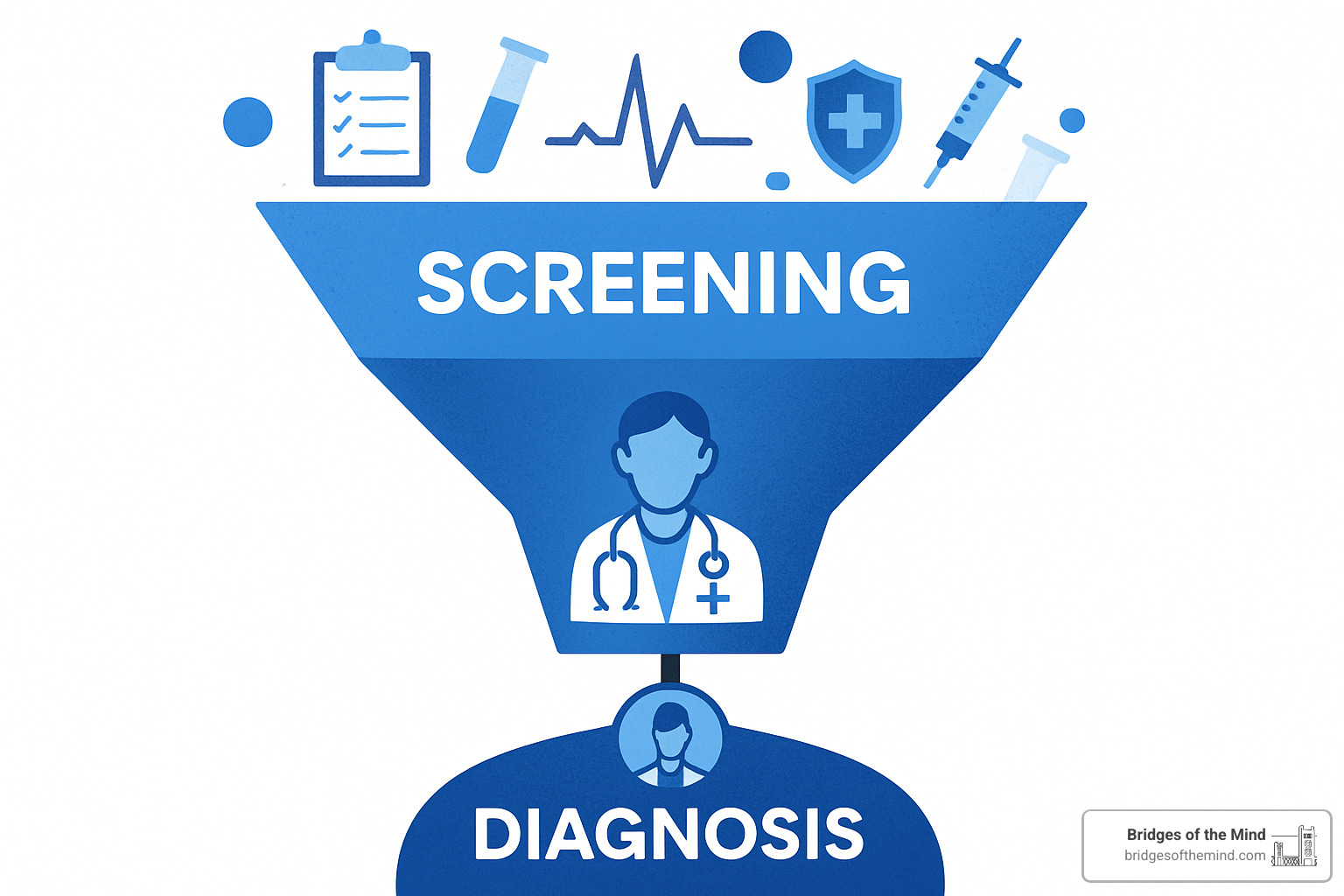
Autism screening is a specialized developmental assessment designed to identify early signs of autism spectrum disorder (ASD) in children, teens, and adults. Unlike a comprehensive diagnostic evaluation, this initial screening serves as an important checkpoint—a way to determine whether further assessment may be beneficial for your child’s development.
Think of autism screening as a careful observation process that helps identify specific behavioral patterns and developmental differences that warrant closer attention. This process doesn’t provide a definitive autism diagnosis but rather creates a foundation for understanding your child’s unique developmental profile and determining the most appropriate next steps.
Medical professionals design the screening process to be thorough yet comfortable for both children and families. We recognize that each child presents differently, and our approach is carefully tailored to accommodate individual needs, comfort levels, and family circumstances. Rather than applying a one-size-fits-all methodology, we adapt our protocols to ensure the most accurate and meaningful results for each unique situation.
Understanding Autism Spectrum Disorder and Developmental Disorders
Autism spectrum disorder encompasses a wide range of developmental differences that affect how individuals communicate, interact socially, and experience the world around them. The term “spectrum” reflects the diverse ways autism can present—from individuals who may need minimal support in daily life to those who require more comprehensive assistance.
Autism spectrum disorder is one of several developmental disorders that can impact a child’s development in areas such as thinking, learning, social interaction, and emotional growth. Unlike other developmental disorders, autism specifically involves core characteristics in social communication and interaction, alongside restricted or repetitive patterns of behavior, interests, or activities.
However, these characteristics manifest uniquely in each person, which is why personalized assessment and understanding are so crucial. Some children may demonstrate exceptional abilities in specific areas while facing challenges in others. Others might develop communication skills at different rates or show preferences for routine and predictability.
Many individuals on the autism spectrum possess remarkable strengths, including attention to detail, pattern recognition, deep focus on areas of interest, and unique problem-solving approaches. Understanding autism through a neurodiverse-affirming lens means recognizing these differences as variations in human neurology rather than deficits requiring treatment.
The Importance of Early Identification and Intervention
Research consistently demonstrates that early identification and intervention can significantly improve outcomes for children on the autism spectrum. The developing brain shows remarkable plasticity during early childhood, making this period particularly important for building communication skills, social understanding, and adaptive strategies.
When autism is diagnosed early, families can access appropriate early intervention services while children are most receptive to learning new skills. Early intervention can help children develop effective communication strategies, build social connections, and learn to navigate sensory experiences more comfortably. These services often include speech therapy, occupational therapy, and specialized educational programs designed to support each child’s development.
However, the timing of identification varies significantly among families. While some children show clear early signs in toddlerhood, others may not be diagnosed until school age or even adulthood. Each timeline is valid, and support can be beneficial regardless of when autism is recognized.
The key is ensuring that screening and evaluation processes are accessible, comprehensive, and conducted by qualified medical professionals who understand the diverse ways autism can present across different ages, genders, and backgrounds.
Who Should Consider Autism Screening?
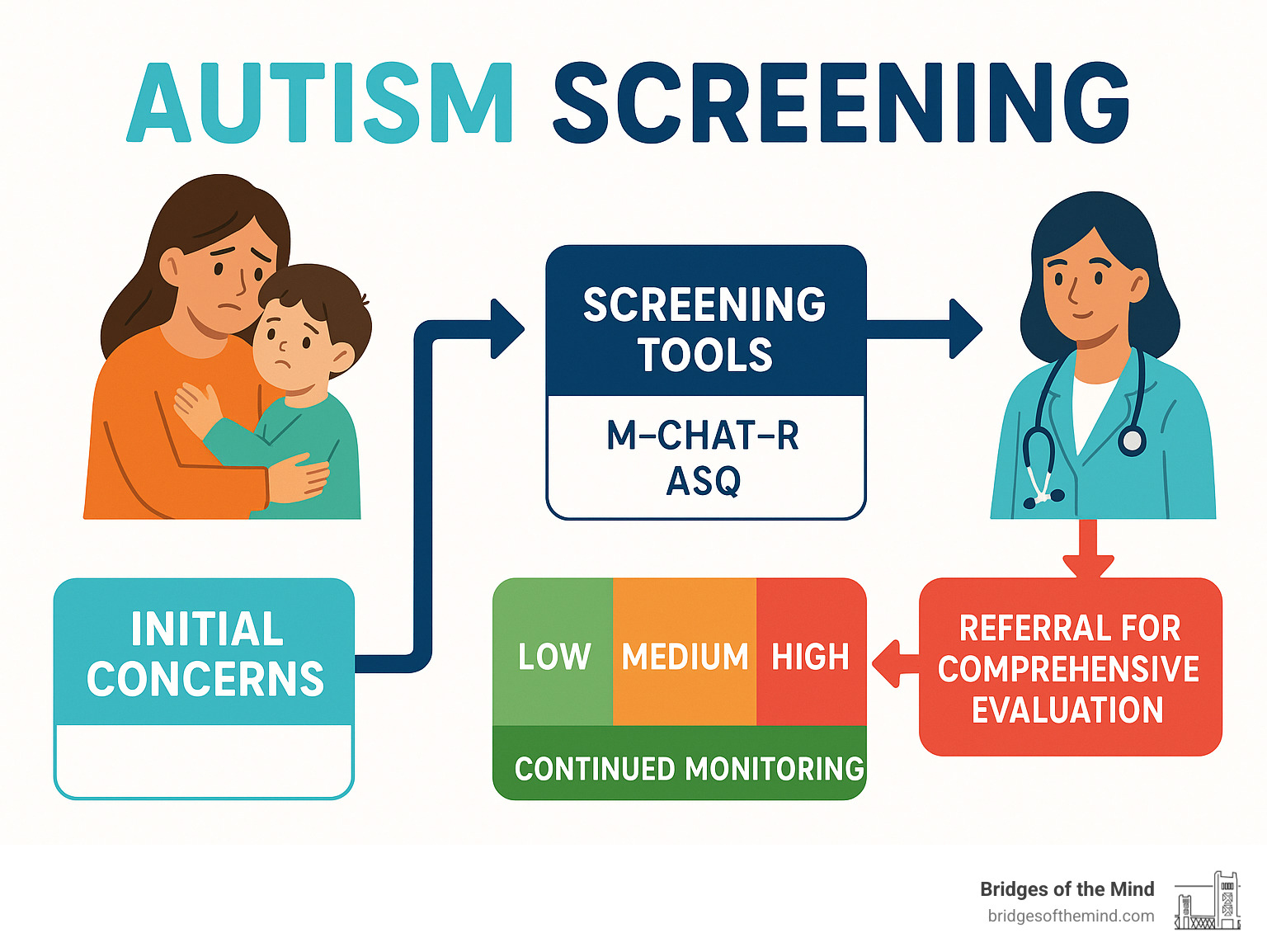
The American Academy of Pediatrics recommends autism-specific screening for all children at 18 and 24 months as part of routine well-child visits with their child’s pediatrician. However, concerns about autism can arise at any age, and screening may be beneficial in various circumstances.
Parents might consider screening for autism if they notice differences in their child’s development, such as limited spoken language, unusual patterns of speech, or challenges with back-and-forth conversation. Social interaction differences, including difficulty with eye contact, challenges understanding social cues, or preferences for solitary play compared to other children, may also prompt consideration.
Some children demonstrate repetitive behaviors or very strong interests that significantly impact their daily routine. Others may show strong reactions to sensory experiences like sounds, textures, lights, or movement. Changes in previously acquired skills or significant differences from developmental milestones might also indicate the need for screening.
For older children, teens, and adults, autism screening might be considered when social challenges, communication differences, or sensory sensitivities significantly impact daily life, relationships, or academic and work performance.
Families with a history of autism or other developmental differences may also benefit from proactive screening, as genetics can play a role in autism development. However, autism can occur in any family, regardless of background or previous experience with developmental differences.
Common Autism Screening Tools and Methods
Medical professionals use various autism screening tools to identify children who may benefit from further evaluation. These evidence-based tools are designed to be sensitive and specific, helping to identify children while minimizing false positives and negatives.
The Modified Checklist for Autism in Toddlers, Revised with Follow-up (M-CHAT-R/F) is one of the most widely used autism screening tools for young children aged 16 to 30 months. This screening tool consists of a questionnaire that parents complete, followed by a structured follow-up interview when needed. The M-CHAT has proven effective in identifying autism in toddlers and is available in multiple languages.
For broader developmental concerns, medical professionals often use general developmental screening tools alongside autism-specific measures. These tools help identify children who may have developmental delays or differences that warrant further assessment.
Older children, teens, and adults may complete the Autism Spectrum Quotient (AQ), a 50-item questionnaire designed to measure autistic traits. The Autism Spectrum Quotient helps identify individuals who may benefit from comprehensive autism evaluation, though any positive screening result should be followed by professional assessment.
School systems also play an important role in identification, as teachers and educational professionals often notice patterns in social interaction, communication, or behavior that may indicate the need for evaluation.
The Screening Process: What to Expect
At Bridges of the Mind Psychological Services, we’ve designed our process to be comprehensive yet comfortable for families. Our neurodiverse-affirming approach ensures that each evaluation is tailored to your child’s individual needs and your family’s specific concerns.
The process typically begins with a detailed discussion about your observations and concerns. We value parent and caregiver insights enormously, as you know your child better than anyone. This conversation helps us understand your child’s developmental history, current behaviors, and the specific questions you hope to address.
Our clinical team uses evidence-based screening tools and observational methods appropriate for your child’s age and developmental level. For young children, this might involve structured play activities and social interaction opportunities that allow us to observe communication patterns, social engagement, and behavioral responses in a natural, comfortable setting.
For older children, teens, and adults, the process may include questionnaires, interviews, and structured activities designed to explore social communication, behavioral patterns, and areas of strength and challenge. We ensure that our assessment methods are culturally sensitive and appropriate for individuals from diverse backgrounds.
Throughout the process, we maintain clear communication with families about what we’re observing and why specific activities or questions are important. This transparency helps families understand the evaluation process and feel confident in the thoroughness of our assessment.

Understanding Screening Results and Next Steps
Autism screening results typically fall into categories indicating low, moderate, or high risk that further evaluation would be beneficial. A positive screening result doesn’t provide an autism diagnosis but indicates that comprehensive assessment by qualified medical professionals would be valuable.
When screening suggests that thorough assessment would be helpful, we work with families to schedule comprehensive evaluation promptly. Our goal is to minimize delay between initial screening and definitive assessment, ensuring that families receive answers and can begin accessing appropriate support as quickly as possible.
It’s important to understand that there is no blood test for autism diagnosis. Instead, diagnosis relies on careful observation of behavior and review of developmental history by trained medical professionals. This process requires expertise in recognizing the diverse ways autism can present across different individuals and age groups.
Even when screening results don’t indicate autism, the process often provides valuable insights about a child’s learning style, social preferences, communication patterns, or areas where additional support might be beneficial. We ensure that all families leave with useful information and appropriate recommendations.
Comprehensive Autism Evaluation and Diagnosis
When screening results suggest that comprehensive evaluation would be beneficial, our team conducts thorough assessments designed to provide detailed understanding of an individual’s unique profile. These evaluations go far beyond initial screening to explore all aspects of development and functioning.
Our comprehensive evaluations include detailed review of the person’s developmental history, standardized diagnostic instruments, cognitive development assessment, and careful observation across multiple settings and activities. We examine communication abilities, social interaction patterns, behavioral characteristics, sensory processing differences, and areas of particular strength or interest.
The evaluation process involves collaboration with families as essential partners in understanding their child’s needs. We recognize that parents and caregivers provide crucial insights about their child’s development, and we integrate this knowledge with our clinical observations to create a complete picture.
Our neurodiverse-affirming approach means that we focus on understanding how each individual experiences and interacts with the world, rather than simply identifying deficits. This perspective helps us develop recommendations that build on strengths while addressing areas where additional support may be beneficial.
Results from comprehensive evaluations include detailed reports that explain our findings, discuss implications for daily life and development, and provide specific recommendations for support, intervention, and accommodations. We ensure that families understand these results and feel confident in implementing recommended strategies.
Supporting Development Through Understanding
Whether autism screening leads to a formal diagnosis or simply provides greater understanding of your child’s unique needs, the insights gained through this process can be tremendously valuable for supporting healthy development.
Understanding how your child processes social information, communicates most effectively, and responds to sensory experiences can help you create environments that promote their success and well-being. This knowledge can inform decisions about educational settings, therapeutic supports, and family strategies.
Many families find that autism screening and evaluation help them better understand behaviors they previously found puzzling or concerning. This understanding often leads to reduced stress for both children and families, as everyone gains clarity about needs and effective support strategies.
The information gathered can also be valuable for educators, healthcare providers, and other professionals working with your child. Clear understanding of strengths, challenges, and effective strategies helps ensure consistent, appropriate support across different settings.
Early Intervention Services and Support Options
Following a positive screening result or formal diagnosis, families often benefit from early intervention services designed to support children’s development. These services are typically most effective when started early, though they can be beneficial at any age.
Early intervention services may include speech and language therapy to support communication development, occupational therapy to address sensory processing and motor skills, and specialized educational programs. An occupational therapist can also provide valuable support for daily living skills and sensory integration.
Many early intervention services can begin even before a formal diagnosis is complete, based on identified needs and developmental goals. This approach ensures that children receive support without delay while families navigate the diagnostic process.
The specific combination of services depends on each child’s individual needs, strengths, and family priorities. Our team works with families to identify appropriate resources and develop comprehensive support plans that address all aspects of development.
Autism Screening Across the Lifespan
While much attention focuses on early childhood autism screening, we recognize that autism can be identified at any age. Many teens and adults seek evaluation when they recognize patterns in their own experiences or when life transitions highlight areas of difference or challenge.
Teen autism evaluation often involves understanding how social demands of adolescence interact with individual differences in communication and behavior. Academic pressures, peer relationships, and increasing independence requirements can highlight areas where additional understanding or support would be beneficial.
Adult autism assessment addresses questions that may have persisted throughout life about social experiences, communication patterns, sensory sensitivities, and behavioral preferences. Many adults pursue evaluation to better understand themselves, access appropriate accommodations, or gain clarity about their experiences.
Our evaluation approaches are carefully adapted for different age groups, ensuring that assessment methods are appropriate, respectful, and relevant for each individual’s life stage and circumstances.
The Role of Healthcare Providers and Families
Your child’s healthcare provider plays a crucial role in the screening process, often conducting initial developmental surveillance and autism-specific screening during routine visits. Child psychologists and developmental pediatricians provide specialized expertise when more comprehensive assessment is needed.
Families play an essential role throughout the process. Your observations about your child’s development, behavior, and responses provide crucial information that guides our assessment and understanding.
We encourage families to document specific examples of behaviors or situations that prompted their concerns. Details about communication patterns, social interactions, play preferences, responses to change, and sensory experiences help us understand your child’s unique profile more completely.
Preparing for appointments by gathering relevant information about developmental milestones, previous evaluations or services, and current concerns helps ensure that our time together is used most effectively. We also encourage families to prepare questions about the evaluation process, potential outcomes, and next steps.
Addressing Common Concerns and Questions
Many families approach autism screening with questions and concerns about the process and potential outcomes. We understand that considering autism evaluation can feel overwhelming, and we’re committed to addressing these concerns with sensitivity and thoroughness.
Some families worry about labeling or stigma associated with autism diagnosis. Our neurodiverse-affirming approach emphasizes that autism represents neurological difference rather than disorder or deficit. We focus on helping individuals understand and celebrate their unique strengths while accessing support for areas of challenge.
Other families express concern about the evaluation process itself, wondering whether it will be stressful or overwhelming for their child. Our experienced team designs assessment activities to be engaging and comfortable, adapting our approaches to each individual’s needs and preferences.
Questions about what happens after evaluation are common. We provide clear information about support services, educational options, therapeutic interventions, and other resources available to families following assessment.

Building on Strengths and Individual Differences
Central to our approach is recognizing and building on the unique strengths that each individual brings. Many people on the autism spectrum demonstrate remarkable abilities in areas such as pattern recognition, attention to detail, logical thinking, creativity, and deep expertise in areas of strong interests.
Our evaluation process is designed to identify these strengths alongside areas where additional support may be beneficial. Understanding an individual’s complete profile—including both capabilities and challenges—allows us to develop recommendations that truly honor their potential.
We work with families to understand how identified strengths can be leveraged to support development in other areas and how to create environments that allow these strengths to flourish.
Research and Evidence-Based Practice
Our approach to autism screening and evaluation is grounded in current research and evidence-based practice. We stay current with developments in autism research, assessment tools, and intervention strategies to ensure that families receive the most effective and up-to-date services.
Research continues to improve our understanding of autism across the lifespan, including how autism presents differently in girls and women, individuals from diverse cultural backgrounds, and those with co-occurring conditions such as intellectual disability.
We integrate this research knowledge with our clinical expertise and family input to provide comprehensive, personalized services that meet each individual’s unique needs and circumstances.
Accessing Quality Services Without Delay
One of the significant advantages of working with our team is our commitment to eliminating waiting lists. We understand that when families have concerns about their child’s development, timely access to evaluation and support is crucial. Our streamlined process allows us to provide comprehensive assessments within 2-3 weeks, ensuring that families don’t lose valuable time waiting for answers.
Our approach to assessment and support is thoroughly neurodiverse-affirming, meaning we celebrate neurological differences and focus on helping individuals thrive as their authentic selves. Rather than trying to change fundamental aspects of how someone’s brain works, we emphasize building skills, developing strengths, and creating supportive environments.
For families throughout the Sacramento area, including those in San Jose and South Lake Tahoe, we provide accessible, high-quality evaluation services that honor the diverse ways children and adults experience the world. Our team understands the unique challenges and opportunities present in our community and tailors our services accordingly.
We work with families regardless of insurance status, though we do accept Kaiser insurance through our specialized Autism Clinic. For those seeking concierge-level services, we provide comprehensive, personalized assessment experiences designed to meet the highest standards of care and convenience.
Moving Forward with Confidence
Autism screening represents the beginning of a journey toward greater understanding and support. Whether results lead to formal diagnosis or simply provide enhanced insight into your child’s unique needs, the knowledge gained through this process can be transformative for families.
Our commitment to personalized, neurodiverse-affirming care ensures that every family receives the support and understanding they deserve. We recognize that each child’s path is different, and we’re honored to walk alongside families as they discover their child’s unique strengths and potential.
For families in the Sacramento area seeking answers about autism, our team at Bridges of the Mind Psychological Services provides accessible, comprehensive services designed to eliminate barriers and reduce waiting times. We understand the importance of timely, thorough assessment, and we’re committed to providing the highest quality care for every individual and family we serve.
Whether you’re a parent noticing early differences in your toddler’s development, an educator concerned about a student, or an adult seeking understanding about your own experiences, autism screening can provide valuable insights and open doors to appropriate support and resources.
The journey of understanding autism begins with a single step—recognizing that differences in development, communication, or behavior might warrant closer attention. By taking this step, you’re demonstrating your commitment to supporting your child’s unique needs and helping them thrive as their authentic selves.
Contact our team today to learn more about our autism screening and evaluation services, and let us partner with you in understanding and celebrating your child’s unique neurological profile. Together, we can ensure that every individual receives the understanding, support, and opportunities they deserve to reach their full potential.