
Understanding the autism evaluation for kids journey can feel overwhelming as a parent. When you notice differences in how your child’s behavior, communication, or social interaction patterns develop, those observations matter—they’re often the first step toward getting answers and personalized support.
At Bridges of the Mind Psychological Services, we understand that every child’s development follows a unique path. Our comprehensive autism screening and diagnostic assessment process uses a neurodiversity-affirming approach that celebrates your child’s individual way of experiencing the world while identifying the specific supports they need to thrive.
Quick Guide to Autism Spectrum Disorder Evaluations for Children
When to seek evaluation: If your child shows delays in social communication, has repetitive behaviors or repetitive patterns, or misses developmental milestones
Recommended ages: Healthcare professionals and the American Academy of Pediatrics suggest autism screening at 18 and 24 months during well-child visits as part of routine developmental screening
Evaluation components: Parent interviews, direct observation, standardized autism screening tools, and comprehensive diagnostic assessment
Who can diagnose autism spectrum disorder: Developmental pediatricians, child psychologists, child psychiatrists, and neurologists trained in diagnosing autism
Timeline: Our autism spectrum disorder evaluations typically require 2-4 appointments spanning 2-3 weeks with no waiting lists
Understanding Autism Spectrum Disorder in Children
Autism spectrum disorder (ASD) represents a beautiful example of neurodiversity—a natural variation in how brains develop and function. Rather than viewing autism spectrum disorder as something to “fix,” we see it as a different way of experiencing and interacting with the world.
When medical professionals and health professionals discuss autism spectrum disorder, we’re describing differences in social communication, social interaction, learning styles, and behavior patterns. The word “spectrum” in spectrum disorder reflects the incredible diversity among children with autism spectrum disorder, each with their own unique combination of challenges and strengths.
Children with autism spectrum disorder typically show differences in two key areas outlined in the Diagnostic and Statistical Manual of Mental Disorders (DSM-5), published by the American Psychiatric Association:
Social communication and social interaction might include persistent deficits in back-and-forth conversation, sharing emotions or interests, understanding facial expressions or body language, or building and maintaining friendships with other children.
Restricted or repetitive behaviors and repetitive patterns might appear as repetitive movements, strong attachment to routines, deeply focused interests showing autistic traits, or unique responses to sensory experiences including unusual sensory sensitivities.
The Centers for Disease Control reports that approximately 1 in 36 children in the United States has autism spectrum disorder. While early signs can often be detected as early as 18 months through autism screening, many children don’t receive a formal diagnosis until much later—even though earlier identification leads to better outcomes for young children.
Early Signs and When to Seek Autism Screening
As parents, you know your child best. While every child’s development progresses at their own pace, certain patterns in your child’s behavior might suggest it’s time to consider autism screening and further assessment by your child’s healthcare provider.
Early signs in social communication and interaction:
- Limited response to their name by 9 months
- Absence of gestures like pointing or waving by 12 months
- No meaningful words by 16 months affecting communication skills
- Lack of word combinations by 24 months
- Limited or absent eye contact with other children and adults
- Loss of previously developed language skills or social interaction abilities
Early signs in behavior patterns and repetitive patterns:
- Repetitive play with toys or objects showing autistic traits
- Unusual reactions to changes in routine
- Intensely focused interests beyond what most children display
- Repetitive body movements or repetitive behaviors
- Unexpected reactions to sensory experiences or unusual sensory sensitivities
Healthcare professionals recommend that parents discuss these observations with their child’s doctor or child’s healthcare provider, who can determine if autism screening or further assessment is appropriate.

Why Early Autism Screening and Diagnosis Matter
Early screening for autism opens doors to timely therapeutic supports tailored to your child’s development needs. Young children’s brains are remarkably adaptable, and early intervention services during this critical window can have profound and lasting impacts on children with autism spectrum disorder.
Research by healthcare professionals consistently shows improved long-term outcomes for autistic individuals who receive appropriate supports at younger ages. These children often develop stronger communication skills, better social interaction abilities, and enhanced cognitive functioning.
An autism diagnosis helps families understand their child’s development and unique way of experiencing the world, reducing frustration and helping parents develop strategies that work with their child’s natural tendencies.
The Importance of Proper Autism Screening Tools
Before a comprehensive evaluation, autism screening serves as a crucial first step in identifying children who may have autism spectrum disorder. Health care providers use validated screening tools to identify children who would benefit from further assessment by mental health professionals.
Common autism screening tools include:
Modified Checklist for Autism in Toddlers, Revised (M-CHAT-R): This screening tool focuses on social communication behaviors and autistic traits in toddlers between 16 and 30 months. Healthcare professionals widely use this tool during routine well-child visits.
Social Attention and Communication Surveillance (SACS-R): Medical professionals use this screening tool to observe key social communication behaviors in children 12-24 months old, tracking child’s development over multiple time points.
Ages and Stages Questionnaire (ASQ): This developmental screening tool examines communication skills, motor abilities, and social interaction patterns across different ages from 1-66 months.
It’s important to understand that autism screening tools are not diagnostic tools—they help healthcare professionals identify children who need further assessment. A positive screening result means your child would benefit from a comprehensive evaluation by specialists trained in diagnosing autism spectrum disorder.
The Comprehensive Diagnostic Assessment Process
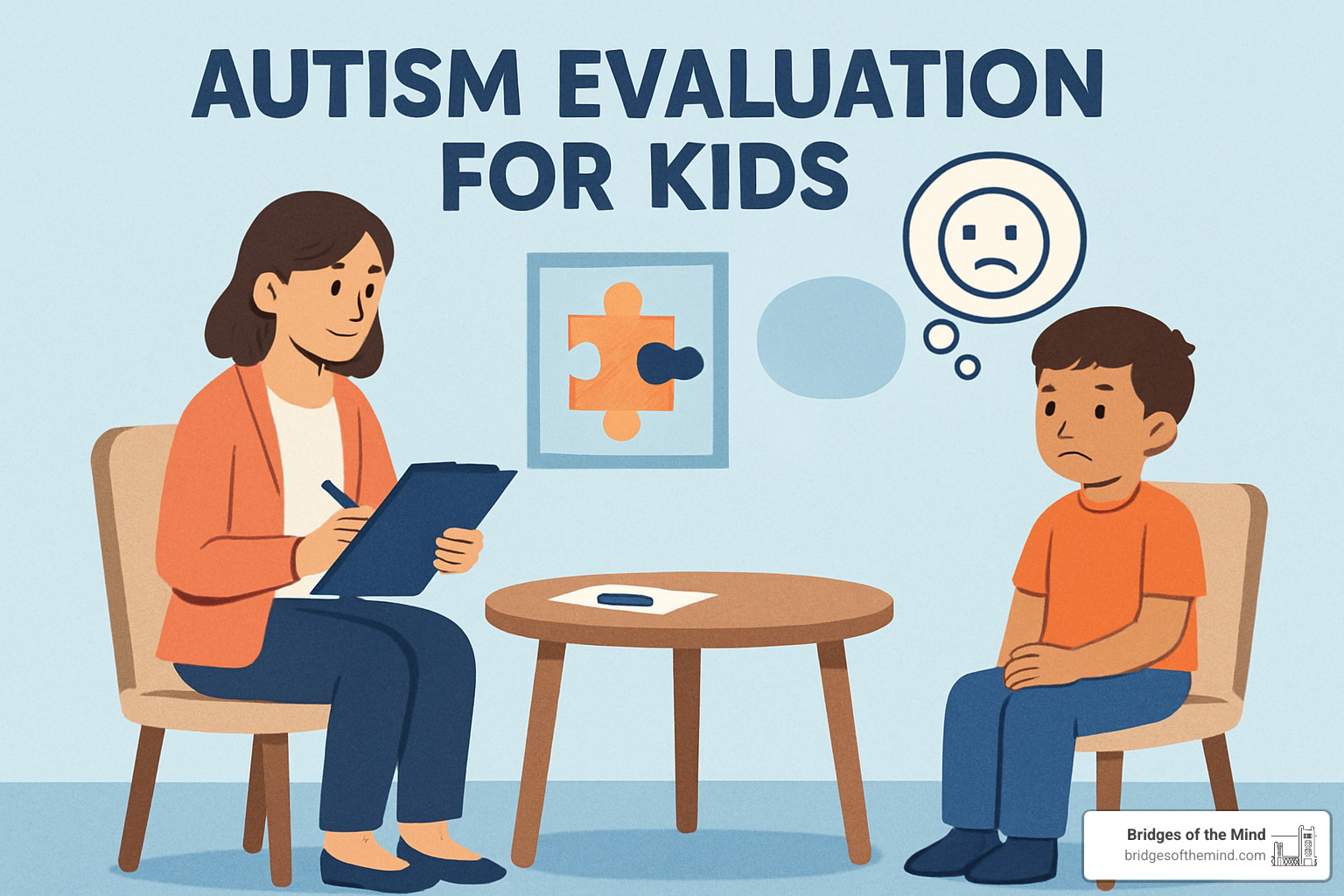
At Bridges of the Mind, our autism spectrum disorder evaluation process is designed to be thorough yet comfortable, giving us a complete picture of your child’s development and unique neurodevelopmental profile.
Initial Assessment Phase
We begin with a detailed parent interview where we learn about your child’s development, your specific concerns about their behavior, and relevant family history. Healthcare professionals on our team carefully review any existing records—medical documents, previous assessments, or school reports—to understand your child’s development path over time.
Gold-Standard Diagnostic Tools
The heart of our evaluation includes evidence-based diagnostic tools recommended by the American Psychiatric Association and used by healthcare professionals worldwide:
Autism Diagnostic Observation Schedule (ADOS-2): This structured assessment creates a playful environment where we observe your child’s natural social communication, social interaction patterns, and play behaviors. Medical professionals consider this the gold standard for diagnosing autism spectrum disorder.
Autism Diagnostic Interview-Revised (ADI-R): An in-depth parent interview that healthcare professionals use to gather detailed information about developmental history and behaviors related to autism spectrum disorder, following diagnostic criteria from the Statistical Manual.
Cognitive and Developmental Assessment: We evaluate intellectual abilities, language skills, and adaptive functioning to understand your child’s development comprehensively, screening for intellectual disability and other developmental disabilities.
Ruling Out Other Conditions
Our diagnostic assessment also examines whether other mental disorders or developmental conditions might better explain your child’s behavior. Healthcare professionals trained in diagnosing autism understand that some children may have global developmental delay, specific language disorders, or other conditions that can appear similar to autism spectrum disorder.
Unlike some medical conditions, there is no blood test to diagnose autism spectrum disorder. The diagnosis relies entirely on behavioral observations and developmental history gathered through standardized diagnostic tools and clinical expertise.
Our Team of Healthcare Professionals
At Bridges of the Mind, our healthcare professionals include specialists specifically trained in diagnosing autism spectrum disorder across different presentations and age groups. Our team understands that autism spectrum disorder can present differently in girls, young children, and those with intellectual disability.
Our mental health professionals and medical professionals work together to:
- Identify children who may have autism spectrum disorder
- Use appropriate autism screening tools and diagnostic tools
- Assess for co-occurring conditions like intellectual disability
- Provide comprehensive recommendations for supporting your child’s development
Health professionals on our team stay current with research and best practices in autism screening and diagnostic assessment, ensuring accurate identification of autism spectrum disorder.
Preparing for Your Autism Spectrum Disorder Evaluation
Gather Important Records for Healthcare Professionals
- Medical records documenting your child’s development and milestones
- Previous assessments or screening results
- School reports noting your child’s behavior and social interaction
- Current medications list
- Family history of autism spectrum disorder or other developmental disabilities
Insurance and Scheduling Considerations
Before your appointment, verify coverage for autism spectrum disorder evaluations with your insurance provider. We accept Kaiser insurance through our Autism Clinic and offer self-pay options for families seeking comprehensive diagnostic assessment.
Preparing Your Child for the Assessment
How you discuss the evaluation depends on your child’s development level and understanding. For young children, describe it as playing games and talking with healthcare professionals who want to learn about them. Older children might appreciate knowing the assessment helps understand how their brain works and identifies ways to support their development.
Understanding Diagnostic Criteria and Autism Spectrum Disorder
The diagnostic criteria for autism spectrum disorder, as outlined in the Diagnostic and Statistical Manual (DSM-5) published by the American Psychiatric Association, require evidence of persistent deficits in social communication and social interaction, along with repetitive patterns of behavior, interests, or activities.
Healthcare professionals trained in diagnosing autism spectrum disorder look for:
Social Communication Impairments:
- Challenges in social interaction across multiple contexts
- Difficulties with nonverbal communication used for social interaction
- Problems developing and maintaining relationships appropriate to developmental level
Repetitive Patterns and Autistic Traits:
- Repetitive behaviors, interests, or activities
- Unusual sensory sensitivities or seeking behaviors
- Strong adherence to routines or ritualized patterns
The diagnostic criteria also specify that symptoms must be present in early development, cause significant impairment in functioning, and not be better explained by intellectual disability or global developmental delay.
Common Co-occurring Conditions with Autism Spectrum Disorder
Healthcare professionals understand that many children with autism spectrum disorder also have other conditions. Our comprehensive diagnostic assessment screens for:
Intellectual Disability: Approximately 30% of autistic individuals also have intellectual disability. Our assessment distinguishes between autism spectrum disorder and intellectual disability, as they require different intervention approaches.
ADHD: Medical professionals recognize that attention challenges affect 30-50% of children with autism spectrum disorder, requiring careful assessment to identify children who might benefit from additional supports.
Anxiety and Other Mental Disorders: Health professionals know that anxiety disorders commonly co-occur with autism spectrum disorder, sometimes requiring specific therapeutic approaches.
Language Disorders: Our healthcare professionals assess whether communication challenges stem from autism spectrum disorder, specific language disorders, or both conditions together.

After Diagnosis: Next Steps for Children with Autism Spectrum Disorder
Receiving an autism diagnosis brings various emotions—relief at having answers, hope for appropriate supports, and perhaps concerns about the future. Healthcare professionals at Bridges of the Mind support families through this transition.
Evidence-Based Intervention Options
Research shows that early intervention services significantly benefit young children with autism spectrum disorder:
- Speech-language therapy to enhance communication skills and social communication
- Occupational therapy for sensory processing, daily living skills, and unusual sensory sensitivities
- Specialized educational programming designed for children with autism spectrum disorder
- Social skills training to improve social interaction with other children and adults
- Parent training and support to help families understand their child’s development
Educational Rights and Support
Children with autism spectrum disorder qualify for special education services. An Individualized Education Program (IEP) outlines specialized instruction and accommodations your child needs, developed in collaboration with healthcare professionals and educators who understand autism spectrum disorder.
Ongoing Monitoring by Healthcare Professionals
As interventions begin, healthcare professionals monitor progress to ensure your child with autism spectrum disorder makes meaningful gains. We provide detailed recommendations tailored to your child’s development and offer ongoing consultation to support their continued growth.
The Preventative Services Task Force and other health organizations recommend regular follow-up assessments for children with autism spectrum disorder to adjust supports as needed throughout their development.
What Makes Our Approach to Autism Spectrum Disorder Different
At Bridges of the Mind, our healthcare professionals focus on several key differentiators in autism screening and diagnostic assessment:
No Waiting Lists: We understand that when families need answers about their child’s development, every week matters. Our healthcare professionals can typically schedule comprehensive autism spectrum disorder evaluations within 2-3 weeks.
Neurodiversity-Affirming Approach: Our mental health professionals focus not just on challenges, but on nurturing your child’s development, unique strengths, and autistic traits that make them wonderfully unique.
Comprehensive Assessment: Our team uses multiple autism screening tools and diagnostic tools, gathering information from various sources to ensure accurate identification of autism spectrum disorder.
Personalized Recommendations: Every child receives individualized recommendations based on their specific development profile, whether they have autism spectrum disorder alone or with co-occurring conditions like intellectual disability.
Frequently Asked Questions About Autism Spectrum Disorder
When can autism screening and diagnostic assessment be considered reliable? Healthcare professionals using standardized diagnostic tools can reliably diagnose autism spectrum disorder as early as 24 months, with some early signs detectable around 18 months through autism screening. The reliability depends on the expertise of medical professionals, comprehensiveness of the assessment, and your child’s development stage.
What if autism screening suggests concerns but my child doesn’t meet criteria for autism spectrum disorder? Children may receive alternative diagnoses such as language disorders, ADHD, global developmental delay, or other developmental disabilities. Regardless of the specific diagnosis, our healthcare professionals ensure your evaluation provides clear descriptions of your child’s development with practical recommendations for support.
How do healthcare professionals screen for autism spectrum disorder in girls? Research shows autism spectrum disorder often presents differently in girls, who may mask social difficulties or show less obvious repetitive behaviors and autistic traits. Our healthcare professionals are specifically trained to recognize these gender differences when diagnosing autism spectrum disorder.
Do you work with other healthcare professionals and organizations? We collaborate with various healthcare professionals and can provide referrals to specialists who understand autism spectrum disorder. Families often find support through organizations that provide resources about autism spectrum disorder, though we focus on evidence-based assessment and intervention approaches.
Moving Forward with Confidence in Your Child’s Development
Taking the step toward autism screening demonstrates your commitment to understanding and supporting your child’s development. At Bridges of the Mind, our healthcare professionals are here to walk alongside you with expertise, compassion, and genuine belief in your child’s potential.
Our comprehensive evaluation process provides the foundation for meaningful support while honoring your child’s development and individual neurodevelopmental profile. Whether you’re noticing subtle concerns about your child’s behavior or more obvious signs, your instincts as a parent matter to our healthcare professionals.
Ready to take the next step? Contact our team of healthcare professionals to learn more about our autism screening and diagnostic assessment services. We’re committed to providing timely, thorough evaluations that celebrate neurodiversity while identifying the specific supports your child’s development requires.
Your child’s development journey is unique, and so is yours as their parent. Our healthcare professionals are here to provide the answers and guidance you need to help your child reach their fullest potential as their authentic self, whether they have autism spectrum disorder or other developmental considerations.