
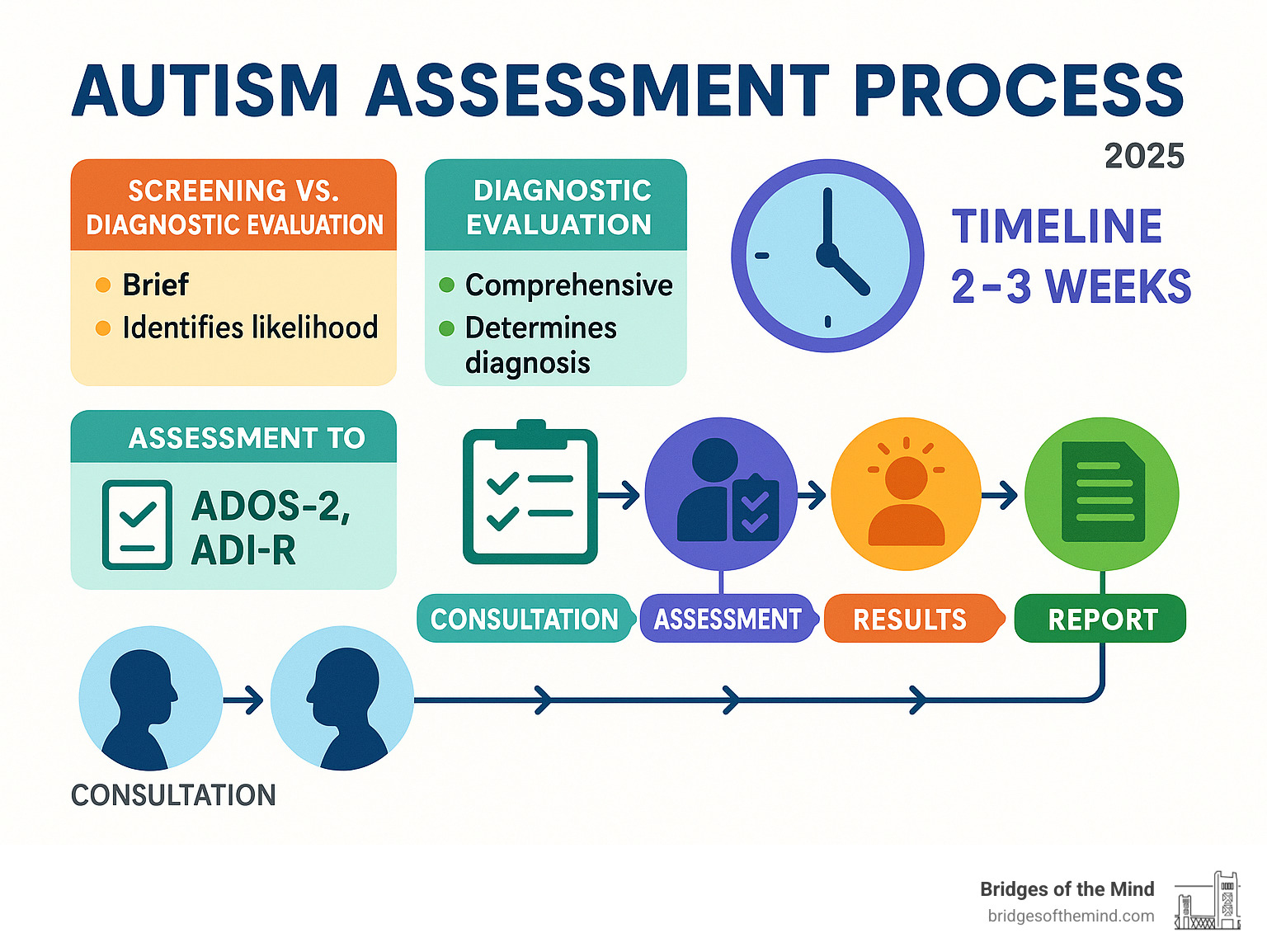
Finding quality autism diagnostic services near me can transform your journey toward understanding and support. At Bridges of the Mind Psychological Services, we provide comprehensive autism evaluations and diagnostic services for families throughout Sacramento, San Jose, South Lake Tahoe, and surrounding areas. Our approach eliminates wait times that plague many centers, with autism evaluations typically available within 2-3 weeks, while ensuring every assessment meets the highest quality standards for accuracy and personalized support.
Understanding Autism Spectrum Disorder and the Importance of Early Diagnosis
Autism Spectrum Disorder represents a natural variation in how the human brain develops and processes the world. Rather than viewing autism through a deficit lens, we embrace a neurodiversity-affirming approach that celebrates the unique strengths, perspectives, and abilities that autistic individuals bring to our community.
Research consistently shows that early identification and early diagnosis of autism spectrum disorder leads to better outcomes when combined with appropriate support and intervention services. Early intervention services can significantly improve a child’s development, communication skills, and social skills while empowering families with the resources they need to support their loved ones effectively.
Our comprehensive autism diagnostic services include:
- Autism evaluation for children of all ages
- Autism evaluation for teens navigating social and academic challenges
- Autism evaluation for adults seeking self-understanding
- Specialized diagnostic evaluations for developmental disorders and developmental disabilities
We also provide assessment services for ADHD, learning disabilities, and independent educational evaluations, ensuring our team can address the full spectrum of neurodevelopmental differences that may impact individuals and families.
The Role of Early Intervention and Applied Behavior Analysis
Early intervention represents one of the most powerful tools available for supporting individuals with autism spectrum disorder. When autism diagnosis occurs early, families can access evidence-based therapies and support services during critical developmental periods when the brain is most adaptable to learning and growth.
Applied behavior analysis (ABA) and ABA therapy form cornerstone interventions that help individuals develop essential life skills, improve communication abilities, and build social skills necessary for success across different environments. Behavior analysis techniques focus on understanding how behavior functions and teaching new skills while reducing challenging behaviors that may interfere with learning and relationships.
Occupational therapy provides another crucial component of comprehensive autism care, addressing sensory processing differences, daily living skills, and emotional regulation strategies. Occupational therapists work closely with families and other providers to ensure individuals receive personalized support that honors their unique needs and strengths.
Our clinical psychologist team understands that effective autism care requires a multidisciplinary approach. We coordinate with various healthcare providers, therapy services, and educational teams to ensure seamless support that promotes better outcomes and helps individuals reach their full potential.
Recognizing Autism Across Different Ages
Early Signs and Developmental Considerations
Understanding autism begins with recognizing early signs of developmental differences, though it’s important to remember that autism presents uniquely in each individual. Parents and caregivers often first notice variations in social communication, play patterns, or sensory responses during their child’s development.
Social communication differences might include variations in eye contact, response to their name, or engagement in pretend play activities typical for their age group. Some children may develop rich vocabularies but struggle with back-and-forth conversation, while others may communicate through alternative methods that require understanding and support.
Repetitive behaviors and focused interests often emerge as children explore their environment. These patterns aren’t problems to eliminate but rather important aspects of how autistic individuals organize their world and find comfort in predictability.
The M-CHAT-R (Modified Checklist for Autism in Toddlers-Revised) serves as a valuable screening tool that healthcare providers use to identify potential autism spectrum characteristics in young children. However, screening tools represent just the first step – comprehensive evaluations provide the detailed assessment necessary for accurate diagnosis and support planning.
School-Age Children and Educational Considerations
For school-age children, autism characteristics often become more apparent in structured educational environments where social skills, communication demands, and behavioral expectations increase. Teachers and educational teams play crucial roles in identifying students who might benefit from autism evaluation and specialized support services.
Many children excel academically while struggling with unstructured social situations, transitions between activities, or sensory aspects of the classroom environment. These challenges don’t reflect intelligence or capability but rather highlight the need for appropriate accommodations and support strategies.
Educational referral processes allow families to access diagnostic services through their school systems, though many families choose independent evaluation providers to ensure comprehensive assessment and avoid potential conflicts of interest in educational planning.
Adult Autism Diagnosis and Self-Discovery
Adult autism diagnosis has become increasingly common as our understanding of autism spectrum presentations has expanded beyond childhood stereotypes. Many adults seek evaluation after recognizing themselves in their child’s autism journey or after years of feeling different without understanding why.
Adults often describe lifelong patterns of social exhaustion, difficulty navigating workplace politics, or intense interests that others don’t share or understand. Masking behaviors – particularly common in women and individuals assigned female at birth – can make adult diagnosis more complex, as many people become expert at hiding their authentic selves to fit social expectations.
The process of adult autism evaluation requires skilled clinicians who understand how autism presents across the lifespan and can differentiate autism characteristics from other conditions like anxiety, depression, or trauma responses that may develop as secondary effects of living undiagnosed.
Our Comprehensive Diagnostic Process
Clinical Team and Expertise
Our autism diagnostic services are conducted by licensed clinical psychologists and neuropsychologists with specialized training in autism assessment across all ages. Our clinicians stay current with the latest research and diagnostic criteria to ensure families receive accurate, reliable evaluation results.
Each member of our team brings extensive experience in autism evaluation and understands the nuances of how autism spectrum disorder presents differently across individuals, ages, and circumstances. We pride ourselves on creating assessment experiences that feel supportive rather than clinical, honoring each person’s unique presentation and needs.
Our providers maintain ongoing training in gold-standard assessment tools and evidence-based practices, ensuring that our diagnostic services meet the highest quality standards while remaining accessible and family-centered in approach.
Assessment Tools and Methods
Comprehensive autism evaluation requires multiple assessment methods to create an accurate picture of an individual’s strengths, challenges, and support needs. We utilize the Autism Diagnostic Observation Schedule (ADOS-2) as a cornerstone of our evaluation process, providing structured opportunities to observe social communication, play, and behavioral patterns in real-time.
The ADOS-2 represents the gold standard in autism assessment, offering standardized activities that allow our clinical psychologist team to observe autism characteristics across different social contexts and communication demands. This tool provides crucial diagnostic information while feeling engaging rather than intimidating for the individuals being assessed.
Clinical interviews form another essential component of our comprehensive evaluations, gathering detailed developmental history and current functioning information from multiple perspectives. For children and teens, we interview parents and caregivers about early development, current challenges, and observed strengths. Adult evaluations focus on self-reported experiences while incorporating input from family members when possible.
Cognitive assessment helps us understand intellectual abilities and identify any learning differences that may co-occur with autism spectrum disorder. This information proves invaluable for educational planning, workplace accommodations, and personal understanding of cognitive strengths and challenges.
Behavioral observations occur throughout the assessment process, with our clinicians noting social communication patterns, sensory responses, and behavioral characteristics that contribute to the overall diagnostic picture.
What to Expect During Your Evaluation
Our diagnostic evaluations are designed to feel welcoming and supportive rather than intimidating or clinical. We begin each assessment with a thorough explanation of the process, ensuring you understand what to expect and feel comfortable asking questions throughout the evaluation.
For children and teens, we create an environment that feels more like engaging play than testing. Our skilled clinicians use activities and games that naturally elicit the social communication and behavioral patterns we need to observe while keeping young people comfortable and engaged throughout the process.
Adult evaluations focus on conversational interviews and structured tasks that help us understand cognitive abilities, social communication patterns, and daily living experiences. We recognize that many adults feel anxious about the evaluation process and work to create a supportive environment where authentic presentation feels safe and encouraged.
Family involvement remains central to our approach, with caregivers providing crucial developmental history and current observations that inform our understanding of how autism characteristics impact daily life across different settings and relationships.
Specialized Services for Diverse Needs
Comprehensive Autism Care Coordination
Beyond diagnostic evaluation, we provide ongoing support to help families navigate the complex landscape of autism services and resources. Our team understands that diagnosis represents just the beginning of the journey, and we’re committed to empowering families with the knowledge and connections they need for continued success.
We work closely with other healthcare providers, educational teams, and therapy services to ensure coordinated care that addresses each individual’s unique needs. This collaborative approach helps prevent service gaps and ensures that recommendations from our evaluation translate into practical, accessible support strategies.
Insurance coverage for autism services varies significantly, and our team provides guidance about navigating benefits and accessing covered services. While we operate primarily on a self-pay basis to ensure service quality and accessibility, we help families understand their insurance plans and connect with covered providers when appropriate.
Specialized Population Services
Our concierge autism evaluation services cater to families seeking premium, personalized diagnostic experiences with enhanced privacy and flexibility. These services appeal particularly to high-net-worth individuals who value discretion, extended consultation time, and streamlined coordination with other providers.
We understand that every family’s circumstances are unique, and our concierge services adapt to meet specific scheduling, communication, and coordination needs that support busy professionals and families with complex circumstances.
For families with multiple children who may benefit from evaluation, we provide coordinated assessment services that consider family dynamics and shared genetic factors while honoring each individual’s unique presentation and needs.

Supporting Families Through the Diagnostic Journey
Preparation and Family Guidance
Preparing for autism evaluation involves gathering information that helps our clinical team understand your complete story. We provide detailed preparation guidelines that help families collect relevant medical records, school reports, and developmental information that informs our assessment process.
Family guidance extends beyond the evaluation itself, as we recognize that receiving an autism diagnosis – whether for a child or oneself – represents a significant life event that requires processing and adjustment. Our team provides resources and support to help families understand what the diagnosis means and how to move forward with confidence.
We encourage families to approach the evaluation process with curiosity rather than anxiety, framing assessment as an opportunity to gain valuable self-knowledge and access to appropriate support rather than a judgment about capabilities or worth.
Educational and Therapeutic Connections
Following diagnosis, many families need guidance connecting with appropriate educational services, therapy providers, and support resources in their community. Our team maintains relationships with quality providers throughout the Sacramento, San Jose, and South Lake Tahoe areas, enabling us to make informed referrals based on each family’s specific needs and circumstances.
Educational advocacy often becomes necessary to ensure students receive appropriate accommodations and services. We provide documentation and consultation that supports families in securing individualized education plans (IEPs) or 504 accommodations that honor their child’s learning differences and promote academic success.
Therapy sessions for related conditions like anxiety, depression, stress, or trauma may become part of comprehensive treatment planning. Our team can provide these services when appropriate or connect families with specialized providers who understand the intersection between autism and mental health concerns.
Wait Times, Access, and Service Delivery
Eliminating Barriers to Assessment
Unlike many centers that maintain lengthy wait times for autism diagnostic services, we prioritize rapid access to evaluation. Our typical wait times of 2-3 weeks for initial appointments reflect our commitment to providing timely support when families need answers and direction.
We understand that uncertainty about autism characteristics can create significant stress for individuals and families. By minimizing wait times and providing prompt, thorough evaluation, we help families move from uncertainty to understanding and action as quickly as possible.
Our streamlined scheduling process and dedicated administrative team work to accommodate urgent situations and family scheduling needs whenever possible, recognizing that seeking evaluation often represents a significant decision that requires timely follow-through.
Quality Over Quantity Approach
Our commitment to personalized support means we intentionally limit our caseload to ensure each family receives the attention and thoroughness their evaluation deserves. This approach allows our clinical psychologists to conduct comprehensive evaluations without rushing through assessments or compromising on quality.
We believe that autism evaluation should never feel like an assembly line process. Each individual and family deserves personalized attention that honors their unique circumstances, concerns, and goals for the assessment process.
By maintaining reasonable caseloads and prioritizing quality over quantity, we ensure that our diagnostic services meet the highest standards for accuracy, thoroughness, and family satisfaction.
Moving Forward with Understanding and Support
Long-term Outcomes and Success
Our goal extends beyond providing autism diagnosis to ensuring that individuals and families have the tools, understanding, and resources necessary for long-term success and satisfaction. We measure our success not just by diagnostic accuracy but by how well families feel prepared and supported following their evaluation experience.
Many families report that receiving autism diagnosis – whether for themselves or their children – provides tremendous relief and clarity about lifelong patterns and experiences. This understanding often leads to improved self-acceptance, better communication within families, and more effective advocacy for needed supports and accommodations.
We maintain contact with families following evaluation to provide ongoing consultation and resource connections as needs evolve and circumstances change. Autism support requirements often shift across development and life transitions, and we’re committed to serving as a long-term resource for the families we serve.
Community Impact and Advocacy
Our work extends beyond individual families to promoting greater autism acceptance and understanding within our broader community. We provide consultation to schools, workplaces, and other organizations seeking to become more inclusive and supportive of neurodivergent individuals.
Through our autism diagnostic services and ongoing support, we contribute to a growing movement toward neurodiversity acceptance that values different ways of thinking, communicating, and experiencing the world. This shift benefits not only autistic individuals and their families but enriches our entire community through increased diversity and inclusion.
We believe that quality autism evaluation and support services represent investments in human potential that pay dividends across lifetimes and generations. By helping individuals understand and embrace their neurological differences, we contribute to a more accepting and supportive society for everyone.
Ready to learn more about our autism diagnostic services? Contact Bridges of the Mind Psychological Services today to discuss our comprehensive evaluation options and schedule your assessment. Our experienced team is here to support you through every step of the diagnostic journey with expertise, compassion, and respect for your unique needs.